Life Imitates The Third VII

I see why Al Gore doesn't allow his speeches to be recorded?  At a speech Monday in NYC, the former VP was caught on tape talking about reducing population as a way to reduce pollution. (Update: The YouTube clip has since been removed by the environmental journalist, Brain Merchant, who posted it.) Said Gore:

One of the things we could do about it is to change the technologies, to put out less of this pollution, to stabilize the population, and one of the principle ways of doing that is to empower and educate girls and women,” Gore said. “You have to have ubiquitous availability of fertility management so women can choose how many children have, the spacing of the children.

“You have to lift child survival rates so that parents feel comfortable having small families and most important — you have to educate girls and empower women,” he said. “And that’s the most powerful leveraging factor, and when that happens, then the population begins to stabilize and societies begin to make better choices and more balanced choices.

From The Third, Chapter 19

Mona shook her head and looked over the plaza. “The only way your kids are going to have any future is if we get this world back to a livable condition. The only way we’re going to do that is with fewer people. People are the problem, not the solution. You know that. I give Teya my credit, and I’m not only jeopardizing your kids’ future, I’m risking the future of every other child in the world too.”
“What if this child’s special? What if he or she is destined to make this world a better place? What if this baby will grow up and invent something or be the kind of leader needed to clean up the planet once and for all?”
“The world tried that for thousands of years, Ransom. It didn’t work. At one point, we had over eight billion people on this planet. What did we have to show for it? Overcrowded cities. Poverty. Starvation. Greed. Wars over finite resources. One more person takes us one step back, not forward. Every living person moves us that much closer to the brink of destruction.”

Widower Wednesday: How She Died

Thanks to all those who gave feedback on the Dating a Widower book cover concepts. It was very helpful to read all of your reactions and suggestions. I’m going with the first concept but will be working with the designer to make several changes to it. Thanks to your feedback, I think the final cover is going to be really awesome. I’m also going to be reworking the subtitle of the book too. Look for some different subtitles to choose from soon.

***

Sometimes I’ll get an email from someone dating a widower who thinks that the widower’s failure to commit or other odd relationship behavior is due to how his late wife died. For example, someone recently emailed me and wanted to know if the widower’s hot-cold behavior toward her could be attributed to the fact that his late wife took her own life.

Depending on how the late wife died may add a layer or two of complexity to the grief process, but her manner of death shouldn’t play a role in whether or not the widower can open his heart to you.  For example, my late wife killed herself. As a result there were some anger and forgiveness issues I had to work through that probably wouldn’t have been there if she had been hit by a bus. However, Krista’s suicide had zero relevance of wanting to start a new life with Marathon Girl. If anything, falling in love with Marathon Girl gave me an added incentive to forgive Krista and move on. The process of making room in my heart for her would have been the same regardless of how Krista died.

There are lots of ways to die but the process of opening one’s heart to someone else is the same for practically everyone. Don’t excuse a widower’s bad behavior because his wife died from cancer, took her own life, or was killed in battle. If he blames his lack of commitment or inability to make you #1 on his late wife matter of death—he’s just passing the buck.  A widower who is ready to open his heart to you will find a way to make it work no matter how the LW died.

Widower Wednesday: Father’s Day

Thanks to everyone who gave me feedback on the Dating a Widower concept covers. I’m talking comments through the end of the week so chime in if you have an opinion.

***

Sunday is Father’s Day. Though most recognize it as a day to honor the fathers in their lives, what many don’t know is that the mother of Father’s Day was one Sornora Smart Dodd, who organized the celebration in 1910 to honor her widower father.

Dodd's mother died in 1898 while giving birth, leaving her father, William Jackson Smart, to raise Dodd and her five younger brothers (including the newborn baby) on a remote farm near Spokane, Wash. While attending a Mother's Day sermon in 1909, Dodd decided that fathers deserve the same recognition.

That’s right, the modern Father’s Day movement was started to honor a widower who did his best to raise six children on his own.

Despite its’ roots in widowerhood, Father’s Day can be one of those days that many women are unsure what, if anything, should be done to recognize those widowed fathers that they’re dating.

Recently, I exchanged emails with a woman who wanted to recognize the herculean effort of a recent widower who was now raising a young child by himself but worried about overstepping her bounds. She tossed a few ideas my way and wanted to know if I thought any of them would work. I didn’t know what to tell her because I didn’t know the widower. Instead I advised her that she knew the widower better and me and to think of something that he would appreciate.

The key to successfully celebrating Father’s Day and just about any other special occasion is knowing that person. Every widower is different and each has his own things that he likes or doesn’t like to do. For some Father's Day might have been a big deal. For others little, if anything, might have been done to celebrate it. So some widowers might appreciate a small gift or a letter expressing your appreciation. Others may like to go out and catch a movie. Still others (like me) may want to spend a day at home with their kids and putting steaks on the grill. Some may not want to do anything.

If you don’t feel you know the widower well enough to guess, talk to him about it and ask what he’d like to do. See if he has any plans and, if he doesn’t, suggest some possible activities. Go with the flow and make sure you’re doing your best to make the day special for him the best you can. If you do that, odds are it will be a good day for both of you.

However you decide to recognize Father’s Day, at the very least be sure to let him know how much you appreciate how he’s handling everything on his plate. And you may also want to let him know that Father’s Day was started by someone who appreciated everything her widowed father did to raise her. That fact alone might make the day a little more special.

***

Note: Grace Golden Clayton is sometimes credited with organizing the first Father’s Day celebration a few years before Dodd. However, Dodd’s celebration was more modern and she also worked tirelessly to make it an officially recognized day. To the victor go the spoils.

Dating a Widower Book Cover Concepts

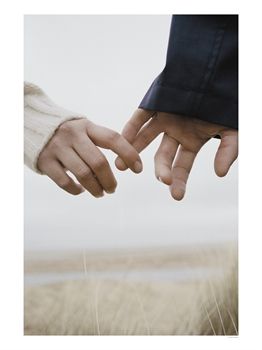
For the last couple weeks I've been working with a book cover designer for the upcoming Dating a Widower book. After a couple weeks of back and forth I've narrowed the concepts I like down to two. Since my target audience spends a lot of time on this blog, I thought I'd solicit your feedback and see which one you like better. Right now I'm mainly looking for feedback on the concepts--the wedding ring "O" or the couple walking. If there are reasons you like one over the other, feel free to elaborate. If you have comments on the font, colors, etc. that's fine too but that's not something I want to spend too much time on right now. Once I narrow it down to one concept, I'll worry about those other details. And, yes, I have a favorite and no I'm not telling you what it is--at least not right now.

Leave a comment below or send me an email with your thoughts.

Update: Welcome all those who are visiting from The Passive Voice Blog. You can read more about my decision to turn down a publishing contract for this book and go indie with this book here and here.

Concept 1

Concept 2

Pause: A Generation Gap

A while back I was playing Monster with my kids (read: chasing them around the house) when one of my boys turned around and held his hand straight up, palms facing each other and yelled “Pause!”

“Pause?” I said. I’d never had any of my kids pause a game of Monster before.

“You know, like the Wii games,” my kid said. “You pause them when you need a break.” Then he held up his hands again and I realized he was making the pause symbol with them.

I nodded and went off chasing the other kids all the while wondering when Pause became a phrase kids used to stop real world games. Back when I was kid—one who grew up with video games—you called Time Out. Since then I’ve noticed that all kids (at least the ones who play with my kids) all of them use the word “Pause” instead of “Time Out” or some other phrase when playing real world games.

Don’t misunderstand. I’m not complaining. I just find it fascinating how games my kids and other play in the virtual world influence the way they play games in the physical one. So far I haven’t seen them use the world “play” when they start up again after taking a break, but have noticed that they sometimes they turn their Wii games into games they mimic in the real world. That's Something I never did either. Back in my day video games on the Atari 2600 or other consoles weren't as interesting, in-depth, or fun as they are today. In the meantime I’m keeping my eyes open for more signs that the virtual world is bleeding over to the real one.

Widower Wednesday: The 6-Week Drop-Off Curve

Thanks to all those who responded to my questions about starting an independent discussion form on my website. For lots of reasons I’ve decided not to put one on my site right now. I might start one in the future but for now I encourage everyone to use the DAW Facebook group and/or the comments threads on the Widower Wednesday posts. For those members of the FB group, please keep in mind there are many women dating a widower who don’t have Facebook accounts and just use the comment threads in the Widower Wednesday columns for advice. I encourage everyone to browse through the comments on these posts and, if so inclined, give your insight to those who are asking for help.

Now on to today’s column. . . .

***

Recently I’ve seen a lot of emails and FB posts from women who are in the early stages of dating a widower only to have the widower unexpectedly stop communicating or just call things off about a month into the relationship. Generally these relationships got off to a great start so most women are a little stunned when they suddenly come to a screeching halt.

In the dating world there’s something that’s known as the six-week drop-off curve.* In a nutshell the six-week drop-off curve is the length of time it takes for someone to get bored with the relationship and realize it’s not for them. In a relationship with a non-widowed man, most women would realize that the man simply wasn’t interested and move on. With widowers, however, women think that if the widower just has time to grieve, the relationship will get back on track. As a result, they wait around hoping the widower will eventually come to his senses and come back to them.

The six-week drop-off curve is why I advice women to approach the initial month or two of dating a widower slowly and with their eyes wide open. Widowers (and non-widowed men) can only fake interest in a woman or a relationship for so long. If they’re just looking for companionship, sex, or to fill a hole in their heart, it usually comes out in the first six to eight weeks of a relationship. Taking things slowly can help you avoid giving to much of yourself or your heart to a widower who doesn’t want the same kind of relationships as you.

For women who find themselves on the short end of the six-week drop-off curve, my advice is simple: Don’t wait around for the widower because odds are, he’s not coming back. And those who do return are generally interested only in sex.

The first thing you have to remember is that you’re dating a man not a widower. It doesn’t matter if the man is single, divorced, or widowed—the six-week drop-off curve applies to everyone. It doesn’t matter how well the first date went or how great your first time in the sack together was. If the widower gets bored or simply decides there’s no long-term potential for the relationship, he’ll end it.

Second, keep in mind that most widower who use the grief excuse for ending things are doing it because it makes breaking up super easy. Most widowers have learned if they say they’re still grieving, most women will give them a free pass. Yes, there are some widowers who are really grieving most widowers are to wussy to just tell you that he’s simply not interested in you anymore.

Third, once men end a relationship they generally go on with their lives. They don’t spend a lot, if any, time wondering if you’re still available, what you’re doing, or if you’re thinking about them. They get involved with work, watch a football game, or work on being a father to his kids. If you’re waiting around for him to come crawling back to you, odds are you’re wasting your time.

Fourth, widower who do contact you again after breaking things off after six weeks are generally lonely and are looking for sex or someone to pass the time with. Odds are they aren’t that interested in you or a long-term relationship. Getting involved with them simply opens you up for more heartache.

Remember, if a relationship is meant to work out, it will. Don’t get sucked into a widower’s mind or relationship games. Widowers are serious about starting a new life won’t play games with your heart. Instead, they’ll treat you like a queen.

* Length of time varies but most dating experts peg the drop off curve at 3-8 weeks.

Life Imitates The Third VI

The World Bank will suggest a global levy on jet and shipping fuel in recommendations to G20 governments later this year on raising climate finance, a senior official said on Sunday.
The Sydney Morning Herald, The Dangers of Bone-Headed Beliefs, Richard Glover, June 6, 2011

Looked at through this lens, our generation has it easy. Already wealthy and armed with new technology, we need to front up to the challenge of building a low-carbon economy.

The tool we'll use is a carbon tax that seeks to subtly redirect some of our choices. Cut your power bill by more than the compensation offered and you get to keep the change.

From The Third, Chapter 2

Dempsey honked the truck’s horn, and Ransom watched as a lady reading the news board jumped in the air. He could remember car-filled streets, but the memories were few and hazy. The clearest was of him sitting in the backseat of his family’s minivan, looking out the window as his mom pulled into a parking lot filled with cars. Perhaps he remembered it so well because the summer sun had reflected off their windshields and reminded him of a sky filled with stars.

"I was five, maybe six, when the carbon taxes went into effect," Ransom said. "I remember my dad coming home from work and telling my mom that they couldn’t afford to drive anymore. Sometime after that, I think the car was sold or given to a recycling center."

Going Independent and the Future of Publishing

After announcing my decision to go independent with my Dating a Widower book, some people were curious as to why I’d turn down a publishing contract. Since I know most of my readers don’t follow what’s going on in the publishing world as closely as I do, I thought I’d give a more detailed explanation for my decision. The publishing industry is going through a similar change that the music industry went through at the turn of the century. Back when I was in college most people still bought CDs at the mall or stores like Wal-Mart or Target. Right around the time I graduated Napster showed up and everyone started downloading digital music to their computer for free. Of course this was illegal and Napster was soon shut down but not before demonstrating there was a big appetite for digital music. Then iTunes came along and showed that most people would willingly pay 99 cents for song or buy digital albums online—usually for less than the price of a CD. What made digital music really take off was the iPod and other digital music players that made it easy to take digital music files from your computer and put them in a device that would fit in your pocket.

Despite screaming from the record companies that some well known bands that the music industry was going to go bankrupt and disappear,  most bands and record labels not only survived but learned how to thrive in the new music world.  However, the biggest winners were independent musicians who now could upload their music to iTunes and could distribute their music just like the big boys. Many talented, independent musicians and bands suddenly had a way to get their music in front the same people as the big record labels without the overhead of distributing CDs or figuring out how to get them in stores. Because of a level playing field many independent bands and musicians have found an audience been able to make a living. Some have even been signed by big record labels after proving there was an audience for their music.

In the last couple of years eBooks and eReaders have revolutionized the publishing world. In the old days going independent (or self publishing) meant the author would write a book then and spend thousands of dollars printing copies of their book. With no way to distribute their work, most copies sat unsold in the author’s garage collecting dust. Now thanks to devices like the Kindle and improved print-on-demand (POD) technology, writers can bypass agents and publishers and have their books in the same online stores as big name publishers without having to invest money in printing actual books. Authors like Amanda Hocking have been able to launch their writing careers by promoting and selling their eBooks online.

With this kind of disruption in the traditional book business there’s the standard weeping, wailing, and gnashing of teeth as Big Publishing watches the business model they’ve relied on for decades being turned inside out. Many authors and industry experts are predicting the demise of big publishers or publishing companies in general. I don’t see that happening. However I think most have the financial resources to ride out the storm and will (eventually) adapt to the changing marketplace. (It’s traditional brick and mortar bookstores that have the most to lose.)

So what does this have to do with my decision to go indie—at least for this book?

Thanks to eBooks and POD technology I can reach this book’s target audience just as well, if not better, than most publishers. Over the years I’ve built up a loyal readership on the subject and in many corners I’m considered the expert on dating a widower. In addition my website receives hundreds of Google hits every day from people looking for information on this very subject. If I didn’t have any of this going for me, signing a contract with a traditional publisher might have been a better way to go.

What I’m hoping to avoid is the mistakes many indie authors make. I can’t tell you how many books by indie authors that I’ve downloaded on Marathon Girl’s Kindle only to delete the books after a couple chapters because the writing, editing, and proofreading wasn’t anywhere it needed to be. I’ve also refrained from purchasing other books simply because it looked like some 12-year-old put it together. I estimate it’s going to cost me roughly $1,000 for a cover, editing, proofreading, and everything else it’s going to take to bring the book to a professional level. However, it’s a good investment and I’m fairly confident that I can earn that money back in a relatively short timeframe because of the need for this book.

Unlike some authors, I’m not married to the indie way of things. I have two other books I hope to get wrapped up soon. One I’d like to take the traditional route while the other one could go either way. A lot of the direction I choose to go will depend on how this project turns out and the lessons I learn along the way. If anything I see my writing future including using the best of both worlds.

Whatever happens, it’s going to be an exciting journey. And I promise to keep you all posted as this and other projects move forward.