Blast from the Past: Diaryland

Remember Diaryland?

When I started blogging back in 2001 (long before blog was a commonly used term), I used a platform called Diaryland. All things considered it was a decent platform. The platform was easy enough that anyone could sign up and start writing, if you knew some basic HTML, you could take one of their basic templates and make it look halfway decent. It also had a neat feature that let you follow other Diaryland blogs and would let you know the ones that had been updated since the last time you logged in.

Diaryland did have its downsides. Comments weren’t tied to posts (they were left in a Guestbook that resided on a separate page), you had to host images on a different server, and the backend interface left a lot to be desired. However, but back at the turn of the century, those features weren’t that big of a deal. The few other blogging platforms out there weren’t much better.

A couple years later Blogger and Wordpress exploded on the scene and, oddly, Diaryland never tried to catch up or upgrade its features. Bloggers complained and the only thing Diaryland did was offer a Gold Membership that offered images hosting and comments for a price. One by one bloggers I followed on Diaryland left for better blogging platforms. Frustrated at the lack of updates, I joined the mass exodus sometime in 2004.

So this weekend I decided to go see if Diaryland was still around. Much to my surprise, it’s still there. Even a bigger surprise was that, with the exception of the site’s logo, it hasn’t changed since I last used it. Apparently people are still using it though it seems like the number of active users have fallen dramatically.  When I checked my list of blogs I used to follow, only one person still uses Diaryalnd and, sadly, their blog is locked. If there are stats somewhere, I’d be curious to know how many active users Diaryland has and why people continue to use it even through there are far superior blogging platforms available.

Still, it’s amazing that all these years the site remains virtually unchanged. It’s a stark reminder that if you don’t adapt and change, the only thing you’re good for is a nostalgic trip down memory lane.

The Social Downside of eBooks and eReaders

The e-book revolution is affecting bookshelves. According to The Economist:

Next month IKEA will introduce a new, deeper version of its ubiquitous “BILLY” bookcase. The flat-pack furniture giant is already promoting glass doors for its bookshelves. The firm reckons customers will increasingly use them for ornaments, tchotchkes and the odd coffee-table tome—anything, that is, except books that are actually read.

A lot of pundits are wringing their hands over this declaring that end of the print book and the demise of reading. I think they’re wrong on both counts. Books aren’t going to die and people aren’t going to stop reading just because of the switch to e-books and e-readers. IKEA sees that books are moving to the digital realm and is trying to make its bookshelves useful for something other than books. (Don’t tell anyone but you can still put books in them if you want.) Offering a new version of their bookshelves is good business move. However, the article reminded me that as much as I love e-books and e-readers there is a social downside to the digitization of books.

I love talking to people about the books they’re reading. Not only is it a great chance to share something you have in common with someone, but it’s a great way to learn why readers like certain books. For a writer, learning what pushes someone’s emotional buttons and keeps them reading is as valuable as gold.

My friends who are readers or writers always have bookshelves overflowing with book. I like scanning the books and talking to them about the new books they’ve been reading. I’ve also had lots of conversations in airports, parks, or other places just by seeing someone reading a book by an author I like or wanted to know more about. I’ve had people come up to me and do the same thing. For the most part, I’ve really enjoyed those conversations.

But as eReaders have grown in popularity, I’ve noticed the opportunity for book related conversations has decreased dramatically. The bookshelves of my friends, though still overflowing, haven’t changed since they started reading books on their Kindle or Nook. Books still come up from time to time but usually it’s only if they’re really excited about the book their reading. For the most part I don’t know what they’re reading unless they keep their Goodreads account updated.

When I travel, I see a lot more eReadres than I do paper books. Talking to someone about the novelty of their Kindle or Nook was cool a year or two ago but now they’ve become more widely available those conversations just don’t work anymore. Besides, I have a hard time asking people what’s on their Kindle. I’d rather see what they’re reading and, if it’s something I’m interested in, start up a conversation around that. With an eReader its impossible to tell if they’re reading a book, author, or genre I want to have a conversation about.

What would be cool is if eReaders had a feature you could turn on that would let other eReaders within 500 feet know what books you have in common. Maybe something like that exists and I haven’t heard about it. Until then, I’ll have to get more creative on how to start  book conversations.

Widower Wednesday: The Late Wife's Friends

A reader writes in with the following situation:

My widower boyfriend is encouraging me to become close friends with the late wife’s friends. I have no problem with socializing with them at parties, family functions, and other social gatherings but I have my own set of friends. It is not that I dislike these people but somehow I feel that his suggestions is not necessary, inappropriate, and perhaps slightly controlling.

I think it best that the late wife’s friends and I remain acquaintances at events and leave it at that. That said if my boyfriend wants to keep in contact and meet up with them on occasion that’s fine but I don’t feel it’s my place to fill in the space left by the late wife.

Am I correct or do you think I should I try to become closer with the late wife’s friends?

I think you’re doing the right thing by being social acquaintances with them. I don’t see any reason you should become friends with them unless there’s a real reason for you to become friends with them.

However, I don’t think the widower’s intentionally being controlling. He’s probably hoping you’ll fit in with the people he and the late wife spent time.  When I finally reached the point where I felt comfortable introducing Marathon Girl to people Krista and I were friends with, there was a part of me that hoped Marathon Girl would fit right in with them. While everyone got along just fine with each other, there was something off about the get-togethers. After a couple of times hanging out together I realized that Marathon Girl was a different person and brought a different dynamic to the group. The friendship we shared with other couples couldn’t continue the way it had been no matter how much I hoped it would. This wasn’t a bad thing but added awareness that by making Marathon Girl number one, there were socials aspects of my life that were going to change too.

My suggestion is to politely tell your boyfriend what you told me—that you’re fine hanging out with his circle of friends at social functions but you have your own set of friends that you’re close to. In the meantime perhaps you can both work on about finding other people that you can both enjoy spending time with as a couple—one where his past and yours don’t get in the way.

Quick Dating a Widower Update

Quick Dating a Widower book update. I’m just waiting on a few marketing/PR related things before I make the official announcement. It will happen later this week. But for those who are dying to read it can find it now by going to Amazon or B&N website and searching for my name or the title of the book. It’s available in paperback and all major e-book formats. Also, like my other books, I’m offering personalized copies of Dating a Widower through my online store. If you'd like a personalized copy, please note that I’m short on copies right now. Those who have already ordered copies should have them mailed out this week. If you order today there might be a 10 or so day wait until I can ship them. If you want it faster than that order it via Amazon or some other online retailer.

Finally, I’ve received several emails from readers outside the US and Canada wondering how they can get a copy. If you want a hard copy the best way is to order it via Amazon or my web store. Readers in the UK or Germany who have Kindles can download it as an e-book here (UK) and here (DE).

Paper Books, eBooks, and the Environment II

Longtime reader and commentator, Phil, did some research and sent over some links about whether eBooks and eReaders are greener than paper books. Please feel free to post corroborating and opposing stats and links in the comment section below. It appears there's still a lot of debate on this issue. The one interesting theme I found when reading through these pages is that the greenest options seems to be having  a paper book read by as many people as possible. To be honest, I don't care which one is more environmentally friendly. Like it or not eBooks and eReaders are the way of the future. It seems pointless to get worked up over which one is greener since there's not much anyone can do to stop the digital tide.

Here's some of the links that Phil sent over:

Are e-books more environmentally friendly?

Almost two-thirds of the publishing industry’s carbon emissions are from deforestation of natural forests, according to US stats. But it’s not that simple, says Raz Godelnik, CEO of Eco-Libris (a company committed to sustainable reading). The materials (such as plastic, copper and lead) from which e-readers and other reading devices (like tablets) are made are not necessarily a greener alternative – and energy consumption in manufacturing is still significant.

Toxic waste is ‘notorious in consumer electronics’, says Godelnik, and there are few recycling options (or a lack of awareness where these do exist). However, several reports suggest an LCD e-reader can offset around 40 books: if you replace five books a year, it’s going to take around eight years before you’ve offset your carbon footprint.

Source: The Fairlady Test House.

***

Are e-books greener than paper books?

Environmentally concerned customers may continue reading paper books. A report by the Centre for Sustainable Communications shows that there are no good reasons to claim that e-books have a better eco performance. Only if you read more than 33 e-books during the lifetime of an electronic reading device it becomes beneficial from a climate point of view.

There is a common assumption that e-books are limiting the burden on the environment. But our results indicate that there is no substantial difference between an e-book read on a reading device and a paper book. The reading device has to be used quite frequently. With the assumptions made in our study you have to read more than 33 e-books containing 360 pages on a newly purchased reading device for it to become superior from a climate perspective” says Åsa Moberg.

Source: The Centre for Sustainable Communications

***

Paper Vs. Electronic - The Green Reading Debate

After comparing energy and resource expenses along with transportation costs, neither seems to have the advantage. The deciding factor, then, often lies on the consumer end: personal usage. Popular opinion says that if you read a substantial amount, go ahead and buy an e-reader. The idea is that an e-reader becomes the greener choice when an owner will read a large amount of books on it – anywhere from 23 to 40, depending on the source. After a certain number of book downloads , e-readers add up to a larger ratio of books-to-environmental-footprint, and new books lose out because of their consistent production requirements. This advantage only stands to improve as e-readers become multifunctional, allowing owners to read newspapers, books, magazines, and other documents, providing positive environmental impacts across several uses.

While the e-reader provides a narrow margin of ecological benefit over new books, all participants in this argument agree on one thing: the greenest choice is a reused book. Borrowing books from a library or friends helps offset past emissions and avoids future resource use.

Source: JustMeans

***

Will Ebooks Jeopardize the Carbon Reduction Goals of the Book Industry?

In April 2009 the Book Industry Environmental Council(disclosure: Eco-Libris is a member of BIEC) announced a goal of reducing the U.S. book industry’s greenhouse gas emissions by 20% by 2020 (from a 2006 baseline), with the intent of achieving an 80% reduction by 2050. When the announcement was made, ebooks had less than 5% market share and weren’t considered to have a significant impact on the industry’s carbon footprint. In 2020 the picture will loom very different – some predict that ebooks will represent then as much as 50% of the market (some estimates go even higher), which means that every second book sold in 2020 will be an electronic one.

This forecast represents not just a dramatic change in the book industry, but also in its carbon footprint. The carbon footprint of the industry that BIEC’s announcement referred to was 12.4 million metric tons (carbon equivalent), or 4.01 kg CO2 per book (source: Book Industry Environmental Trends and Climate Impacts Report). The largest contributor to this footprint, according to this report, is the logging and manufacturing of paper, which constitute 87.3% of total carbon emissions.

If you eliminate the paper, one must assume, the book industry should have no trouble meeting its 2020 goal. Well, not so fast. E-reading is indeed paperless, but it doesn’t mean it is has no carbon footprint. For example, Apple’s iPad, according to the company, has a carbon footprint of 130 kg (carbon equivalent), which is equal to the footprint of 32.4 paper books.

Trying to determine how e-reading will influence the total footprint of the book industry is not an easy task. First, most device sellers like Amazon and Barnes & Noble do not provide any information on the footprint of their devices. Second, in the case of tablet computers like the iPad, we’re talking about multifunctional devices where reading books is just one of their functions and often not even the most popular one.

Still, the data available is enough to conduct a preliminary analysis, and thus we created various scenarios, taking into consideration different carbon footprints of e-readers and related variables such as the number of e-books read during the life time of a device.  The results we got were a bit surprising – even if the carbon footprint of all printed books sold by 2020 will be reduced by 20%, the chances the book industry will meet its goal are not very high.

Source: Triple Pundit

***

Is Digital Media Worse for the Environment Than Print?
If your goal is to save trees or do something good for the environment, the choice to go paperless may not be as green or simple as some would like you to think.
Digital media doesn't grow on trees, but increased use of digital media is having a profoundly negative impact on our forests and the health of our rivers. Computers, cellular networks and data centers are connected to the destruction of over 600 square miles of forest in the U.S. One of the more significant direct causes of deforestation in the United States is mountaintop-removal coal mining in the states of West Virginia, Kentucky and North Carolina.
America's adoption of networked broadband digital media and "cloud-based" alternatives to print are driving record levels of energy consumption. According to the U.S. Department of Energy, the electricity consumed by data centers in the United States doubled from 2000 to 2006, reaching more than 60 billion kilowatt hours per year, roughly equal to the amount of electricity used by 559,608 homes in one year. According to the EPA that number could double again by 2011.
Chances are that the electricity flowing through your digital media devices and their servers is linked to mountaintop-removal coal from the Appalachian Mountains. The Southern Appalachian forest region of the U.S. is responsible for 23% of all coal production in the United States and 57% of the electricity generated in the U.S. comes from coal -- including the rapidly growing power consumed by many U.S. data centers, networks and consumer electronic devices.

Source: PBS

Paper Books, eBooks, and the Environment

Indie author Melissa Douthit has decided not to offer print versions of her next book, The Legend of the Rai Chaelia, in order to reduce her carbon footprint.

For anyone who has read the first book and is looking forward to continuing on to the second, it is fairly obvious that there is a strong environmental theme running through the story, given the race of people called the Terravail, which in the story is an ancient word for “respect for the land.”  The Terravail are the people who have a special connection to the land and feel whatever the land feels so they have a vested interest in keeping it preserved.  I think anyone who has read the book will see where this is going in the story.

So the question remains, should I offer the books in print when it seems from the very nature of the story itself, that that would be something very wrong to do?  I know I have told several people, and also posted on my website, that the print version of The Raie’Chaelia will available in September but now I think I’ve changed my mind.  I’m sorry to anyone who was looking forward to the print version.  I know that this decision will more than likely hurt me as an author, as there are so many readers out there who prefer print books, but after having done some research, I don’t really care if it hurts me.

The nice thing about being an indie author is that you have the flexibility to offer books in any format you want—even if it kills one’s writing career. No doubt Douthit’s intention to reduce our dependency on paper products is an admirable one but like so many environmental decisions they're designed to make the person doing the act feel good about themselves but do little, if anything, to actually help the environment.

When it comes to the environmental issues decisions we’re taught to think that there’s a “solution” for every environmental issue. In reality there are no solutions to any problem–environmental or otherwise—only trade-offs.

For example, every spring one of the trendy environmental things to do is to celebrate Earth Hour. To celebrate you turn off your lights of an hour to reduce greenhouse gas emissions. (For the record, I turn on all the lights during this time.) Yet while that hour makes people feel like they’re doing something for the planet—good feelings is about the only thing this green publicity stunt accomplishes. Instead of sitting in the dark, many Earth Hour participants light candles which, as Danish scientist Bjorn Lomborg points out, cancels any environmental impact these people were hoping to achieve.

When we switch off the electricity, many of us turn to candlelight. This seems natural and environmentally friendly, but unfortunately candles are almost 100 times less efficient than incandescent light bulbs, and more than 300 times less efficient than fluorescent lights. Using one candle for each extinguished bulb cancels the CO2 reduction; two candles emit more CO2.

And he’s not even taking into account all the particulate pollution that candles emit.

Douthit's is trying to save trees and paper, but what trade off might she be making not only in terms of the environment and her career.

Ebooks obviously use less paper than paper book. However, using an eReader (Kindle, Nook, etc.) has its own impact on the environment via mining, manufacturing, refining, shipping, distribution, and electricity used over its lifetime. Maybe an eReader has a smaller impact on the environment than say buying 100 paperbacks, but what happens if someone upgrades their eReader every year or two owns multiple eReaders? Douthit has not control over other people's purchasing decisions. Those who read her eBooks but upgrade their eReader every year might mitigate any positive environmental impact she hoped to make.

Besides, when it comes to their impact on the environment indie authors can utilize tools that the big six and other smaller presses don’t use much: print on demand (POD) technology. Most (big) publishers print thousands or millions copies of a title and ship them off to stores. If the books don’t sell, they’re returned and destroyed. But with POD a book is printed and shipped as soon as someone orders one. There aren’t hundreds or thousands of copies sitting around collecting dust or heading to landfills because no one wants them. Resource wise it’s about as efficient as you can get when it comes to printing books. I took advantage of this technology for the paperback edition of my Dating a Widower book. However, I made that decision not because of it lessens my impact on the environment but because it was less expensive than paying for thousand of copies of printed books. Plus, I don’t have to deal with the problem of storing or distributing them. It’s odd that Douthit doesn’t take advantage of that especially when you consider that trees are one of the most renewable resources on the planet and are in no danger of disappearing anytime soon—especially if our forests continue to be managed properly.

Despite the rapid growth of eBooks and eReaders, millions of people still enjoy and purchase paper books. Limiting one’s potential audience to those with eReaders limits one’s exposure. And since Douthit’s books offer an environmental message (one that she is very passionate about) it seems the best way to spread her word is to get her books into the hands of as many people as possible. Authors who limit themselves book to eBooks are only reducing the number of potential readers and, quite possibly, their careers*. Personally I don’t care if eBooks and eReaders are better for the environment or not. I prefer reading eBooks on my Kindle because they’re cheaper than print books, more convenient to buy, and don’t fill up my already overflowing bookshelves. If that happens to be better for the environment, so be it.

Douthit seems happy with her decision—and that’s fine. Like all writers she’s untimely in charge of her writing career and needs to make a publishing decision she can live with. However, considering Douthit dreams of being a fulltime writer, her choice to go eBook only seems to make that possibility a lot more difficult.

*For writers looking to sell short stories or novellas, the eBook only approach makes more sense. Going eBook only for full length fiction or non-fiction is also an inexpensive way to get a book into the market if you don’t have the time or money to spend on typesetting. However, if you ebooks take off, I suggest taking some of the profits and investing them into a POD paperback option. Considering where the book market is in complete flux and no one really knows where it's going to end up, adding more ways for people to read your book is the best way to grow your audience.

(Hat Tip: The Passive Voice)

Widower Wednesday: Pick up the Phone

I’ve noticed a growing trend when it comes to solving or discussing relationship issues with a widower. Instead of talking to each other, the couple will try to solve their problems via text messaging, instant messaging, or email instead of on the phone or in person. Often it seems when relationship issues are worked on through this method it seems like the problem is never resolved to either party’s satisfaction or misunderstandings occur and the problem gets worse.

All of these technologies are great communication tools but when it comes to relationship communication they can be easy for both parties to hide behind. It’s a lot easier to send a text, IM, or email instead of talking with someone about a problem. I know that when Marathon Girl and I are having a tough day it’s a lot easier for me to send a text to tell her something then pick up the phone. Yet, when I call her instead of typing out a message, we usually resolve the situation sooner and get back to loving each other again.

I’ve noticed the same thing with my working relationships too. At my day job I need to communicate people in Europe and Asia on a daily basis. When a task or issue comes up, usually it’s faster more convenient to shoot off an email or IM instead of picking up the phone. Because of time and language differences an email chain can drag on for days before I understand what the person needs or get some clarification on the project. This usually leaves me and the person on the other end frustrated. So at work I’ve made it a priority to pick up the phone and call people if I have questions about an email or task that’s been assigned to me. I’ve found that not only does it resolve or clarify the issue faster than email or IM, I’ve also have better work relationships with my overseas co-workers.

So today’s suggestion is if you have an issue or need to talk to your widower about a relationship issue, pick up the phone and call him instead of emailing, texting, or IMing him. (The same goes for widowers.) Better yet, if possible, do a face-to-face meeting so you can pick up on his non-verbal signals he may be sending. One of the keys to keeping a relationship moving forward is being able to communicate with each other.  Learning how to effectively do that in person or over the phone will help build those skills more effectively than text messages or other forms of electronic communication.

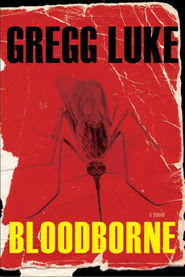
Book Review: Bloodborne by Gregg Luke

Gregg Luke’s new novel, Bloodborne, will make you want to stock up on mosquito spray with lots and lots of Deet. You may hate those creatures when they bite you during a backyard barbeque but you’ll hate them even more when you realize they can possibly be used to transport bioweapons that make the West Nile Virus look like the common cold.

But pesky misquotes are only a part of the suspenseful plot of Bloodborne. The hero of the story is Dr. Erin Cross—a brilliant research scientist who unexpectedly finds herself the target of terrorists. Throughout most of the novel Cross, aided by ex-Special Ops agent Sean Flannery, finds herself on the run as she tries to figure out why anyone would want to kill her or be interested in her research.

Luke does a great job with a novel that hooks you from the first chapter. Even though Luke has a degree in Biological Sciences and works as pharmacist, Luke does a masterful job of present complex research and biological information in such a way that any adult reader can understand. It makes the impending mosquito invasion seem all the more probable. The mystery is unveiled slowly but at just the right moments that it keep you turning the pages. Despite their shortcomings, Dr. Cross and Flannery characters that you can empathize with and root for. Even the main villain has a tender and caring moment which makes him feel human—even though you can’t stand the guy and hope he gets what he deserves. Admittedly I haven’t read a lot of books along these lines but the idea of using mosquitoes as bioweapons seems fairly original—at least to me. (If it’s been done before, let me know of the book in the comments below.)

If you like medical thrillers, suspense novels, or have a fascination with misquotes, then Bloodborne is the book for you. My only recommendation is that you stock up on some bug spray before reading it. Better yet, bring back DDT and eliminate those bastards once and for all.

4 out of 5 stars for the page-turning and intriguing novel, Bloodborne.

Full disclosure: I received a copy of the book in exchange for an honest review. Purchase at Amazon here.

Family Runs III

One of the benefits of having a baby in the summer is that you can take her outside. In our house this means the baby gets to come with us on family runs. On Saturday we introduced that baby to her first family run. The baby slept the entire way and her four-year-old sister didn’t poke her or otherwise try to disturb her during the four mile trek so Marathon Girl and I considered the run an overwhelming success. So successful, in fact, we’re taking the whole crew on another long run Monday morning. It’s fun to watch the way our family runs have morphed over the years. Instead of pushing everyone in running strollers, our two oldest boys are now on bikes and big enough and strong enough that they can easily outpace mom and dad and will now wait for us at corners or stop signs for us to catch up with them. In a few years they’ll be old enough to stay at home by themselves instead of having to come with mom and dad. We try to make the runs as fun as possible for them now in hopes they’ll want to keep riding their bikes with us (or, perhaps, run with us) when that time comes.

Though I hope the kids don’t grow up too fast, I personally can’t wait for the four year old to get off her training wheels next summer so she can ride alongside the boys. Two weeks ago I pushed her and the two year old in the double-wide running stroller. The two kids and the stroller weight approximately 100 lbs and after 45 minutes of pushing them I was seriously beat. Having the stroller get to heavy has always been a sign that it’s time to kick the kid out of the stroller and make them bike it. Our oldest daughter’s days in the stroller are seriously numbered.

And for those who are wondering why Marathon Girl is running only a month after giving birth, I don’t know how to explain it but that woman’s body just heals remarkably fast. (For the record, I've been telling her to wait and take it easy.) She’s not up to her prime speed yet but Saturday she was running faster than me and a lot of the other runners—and she was pushing the two year old in our single wide. Can’t wait to see her run some more marathons next year.

College Football = Family Time

As a kid my dad took me and my brother to Utah State football games. Some of my fondest memories as a 5-year-old were sitting about as high as one can sit in Romney Stadium watching the action on the field.

We moved soon after that and though I watched a lot of football with my dad, we didn’t attend any Utah State games for another 10 years or so. The only reason we went back was because Utah State offered family passes to their football games. Since they were cheap, I was able to talk my dad into getting one. I think the family only attended the first game. I believe my dad and I were the only ones that used the pass after that. Most of the time we watched the Aggies get their butts kicked by unheralded college teams like Pacific and Cal State Fullerton but we had a good time anyway. It was football, after all. It was hard not to have a good time.

Looking back, I realize the games we went to as a kid and a teenager were fun not because of the football but because I got to hang out with my dad. Now that I have young kids of my own who like watching games the occasional game on TV and playing football in the yard with me, I thought it would be fun to take them to some college games. The problem was finding a close and fun place to take them.

The popular college football tickets in this state are to Utah and BYU games. Having attended games in both stadiums I know from firsthand experience that neither are places I want to take young kids. The passion and intensity that can be found in both places is great if you’re in college or an adult who has his or her identity wrapped up in a football team, but there not so good if you’re a dad trying to spend a fun Saturday afternoon with the kids. (Utah State games aren’t much better.)

Last year I got word that my alma mater, Weber State, was offering family passes for its home football games. I bought one on a whim even though I wasn’t sure if my kids were going to enjoy it. At the very least I figured it would give me an excuse to go to a couple of games—even if I ended up going with just one or two of the kids. Besides, I figured the kids would have a good time since Weber State games are about as family friendly as a football game can get. On a good day the stadium is half full. That means if your kids get bored about halfway through the game, there’s plenty of empty bleachers to play on and tons of other bored kids to befriend. And the fans that do show up for games never have high expectations. If Weber State wins, everyone goes home happy and somewhat pleasantly surprised. If they lose, everyone shrugs their shoulders and goes home happy. It’s kind of the way sporting events should be.

Much to my delight, the kids loved going to the games. Granted they seemed to enjoy the kettle corn and root beer I bought them just as much, if not more, than the action on the field but the loading up the van on Saturday afternoons and making the 90 minute drive to Ogden become something they really looked forward to.

This year renewing the family pass was a no-brainer. The tickets arrived in the mail yesterday and the kids were thrilled when I showed them what was in the envelope. We marked the games on the calendar and the kids went to bed tonight chattering about kettle corn and upcoming football games. And to be honest, I’m just as excited about it as they are.

When they look back at these days I hope they realize the reason I take them to football games isn’t because of the action on the grid iron. It’s because I enjoy spending lots of uninterrupted time with them. Football games just happen to be a fun way to do just that.