LOST: Meet Kevin Johnson

LOST: Meet Kevin Johnson

My favorite part “Meet Kevin Johnson” was the episode’s irony. It was chalk full or irony. This is what I picked up on:

• In this episode Michael pawns Jin’s watch for a gun and bullets to kill himself. It was this same watch that Jin tried to kill Michael for on the island.

• Michael killed Ana Lucia and Libby (accidently) in order to get Walt back from the Others. In this episode we see that loses his son after he tells Walt what he did.

• Ben says that Charles Widmore doesn’t have a conscious, yet we’ve seen how Ben doesn’t have a problem killing others – including his own father.

• My personal favorite ironic moment was when Sayid turn Michael over to the boat’s captain because Michael is working for Ben. Yet we know in the future, Sayid will be working for Ben and carrying out assignations.

I also thought the song that was playing on the radio when Michael tried to kill himself the first time sounded kind of happy and cheerful but I didn’t recognize the song or pick up on the words. Anyone have any insight to that?

Since a mass slaughter appears to have begun on the island, it makes me wonder how many people actually survive. A few episodes back Hurley was visited by a mysterious man who wanted to know if there were other survivors. Maybe what he was really asking was not who survived the 815 plane crash but the mass killings that took place on the island. Maybe that’s why Kate ended up with Aaron.

And if Rousseau is dead, I’m going to be mighty upset. (Karl on the other hand, I really don’t care much about.) She’s one of my favorite characters even though we don’t know that much about her. And I was really hoping that before the series ended, we’d see a flashback on her to know how she came to the island, how she lost her daughter, etc. Okay we don’t know if she and Karl are really dead but I doubt they’ll be up and walking in the next episode. And thanks to the writer’s strike, we have to wait five weeks to get any sort of answer.

Interview with Damon Lindelof and Carlton Cuse

For all the LOST fans out there, UnderGroundOnline has a fairly in-depth interview with Damon Lindelof and Carlton Cuse. Lots of juicy tidbits about tonights episode, where the series is headed, and some insight into writing the show. Some tidbits:

UGO: Is the narrative structure going to change, yet again, from on island present with flash forwards to something else entirely?

CARLTON: Well this season is really about connecting the dots between what you saw in the finale last year, which was Jack and Kate's flash-forward, and the events on the island that were sort of catalyzed by the arrival of the helicopter. We're going to put some of those pieces together this season. We can't say much about what the format and structure of next season will be like because I think it would spoil the ending of this season. As this season gets closer to the end it is going to become more than apparent where the story wants to go next.

***

UGO: When was the decision to use time travel in the story made?

DAMON: It's been in the DNA of the show since the very beginning. Obviously, one thing the flash backs and the flash forwards provide you with is the idea of time travel. You're bouncing around in time and events from the past are seemingly influencing the present, but it's not a traditional time travel story until we started talking about what the hatch was there for, and what this electromagnetic energy that the hatch is trying to contain is and what would be the effect of that hatch going away, otherwise known as the purple sky event. And it was sort of those conversations which obviously happened way back in season one when Locke and Boone found the hatch that were the early precursors of time travel. I will say, though, that the first significant event in the show where we were thinking in the back of our minds that this is going to require a story telling element that isn't traditional narrative, is the discovery of Adam and Eve in the caves.

You can read the entire interview here.

Book Review: The Road by Cormac McCarthy

With all the other writing I’m doing, I never have time to write reviews of the books I read. I will try to do better. Please note I’ve changed from four star reviews to five star reviews so they match up with my ratings at GoodReads. (And if you like books, get your butt over to goodreads.com, set up an account, and start sharing your thoughts about books you love and hate with friends. You can also see what books I’ve read so far this year, what I’m currently reading, and what’s on my shelf to read.)

The Road by Cormac McCarthy

Generally I find books that win prestigious prizes either 1) boring and/or 2) a bunch of literary drivel. The only reason I bothered to read Cormac McCarthy’s The Road (winner of the 2007 Pulitzer Prize for fiction) was because it came recommended by a friend whose opinion I trust.

I’m glad I did. This book had me riveted from beginning to end.

The book is about a father and young son who journey through a post-apocalyptic world (North America?) trying to survive in a world that is seemingly without plant or animal life of any kind. Cities are empty. Food is scarce. The only other people are those who are also trying to survive. The survivors they encounter will do anything to keep surviving.

Even without learning the names of a single character, where they are traveling to (the California coast?), and what caused the world as we know it to end (nuclear war?), McCarthy creates vivid portraits of two people trying to survive in a dangerous and dreary world. The father’s constant pursuit of finding a better place – one where they can survive – is driven by his love for his son and the hopes that his son can, one day, have a better life. In a world where everyone else has lost their humanity, the father does his best to keep some sort of civilized quality to their meager existence.

McCarthy’s writing is short and to the point but carries a strong poetic quality to it. He’s also able to paint a picture of a truly lifeless world in such a way that’s very haunting. Two months after I read it, I still think back to certain passages where he described the dead world and shudder. And even though the book paints a bleak portrait of humanity’s future, it does leave the reader with home that life will continue despite the awful world the characters find themselves in.

If you want a well-written, moving book without the literary pretense that comes with most award-winning books, then you’ll enjoy The Road.

Five stars (out of five) for a page-turning and unforgettable book.

The Road by Cormac McCarthy

Overcoming a Technology Gap: Texting

texting

I’ve overcome a technology gap: I’ve learned how to text. Were I about five or ten years younger no doubt I’d have mastered this long ago or been ostracized for not knowing how. But when bought my first cell phone back in 2001, they were mainly used for – get this – phone calls. Now they’ve morphed into amazing communication devices. And though I like some of the extra gadgets on my cell phone like the camera and occasionally use them, texting has been one of those things that eluded me until last week.

It started when my brother (10 years younger) sent me a text from New York telling me that he and his buddies were going be in the audience for an episode of The Late Show. I wanted to text him back and tell him I wasn’t going to watch unless he or one of his friends did something stupid to get on camera.

Of course writing my thoughts out in a text one letter at time (the only way I knew how to do it) would take forever. And I didn’t have the time because I was at work and in the middle of project. So I handed the cell phone to the company’s receptionist and asked to type the response to my brother. Her hands flew in a furry over the keys and in about 15 seconds had typed out the response I requested.

“It’s amazing how fast you can type that out,” I said.

It’s easy when you have predictive text,” she said.

“Predictive text?” I said feeling like an idiot.

The receptionist them explained how it worked and then showed me how to do it. I went back to my office and quickly composed a text to Marathon Girl telling her I was going to be a little late coming home. Since I never text, Marathon Girl immediately called after reading the message and asked if I was mad at her.

“Why do you think I’m mad at you?” I said.

“You sent me a text message instead of calling,” she said.

“I’m not mad,” I said excitedly, “I just learned how to text.” And spent the next five minutes explaining to her how easy it was to send text messages using predictive text. To prove the point I sent her some loving text messages after our call ended.

I have no plans to text on a regular basis or become one of those people where it’s the preferred method of communication. But should that be the best way to send someone a message, it’s nice to know I can do it.

No doubt this will come in handy when I need to get hold of my kids once they have their own cell phones – if it’s still the preferred method of communication.

LOST: Ji Yeon

Jin's Grave

Dear writers of LOST (especially Drew Goddard and Christina M. Kim):

You probably think you’re really clever by putting a flashforward and a flashback in the same episode. I know you were trying to make it seem that Jin was on his way to the hospital to be with Sun. I know you were trying to build tension in the show and make the surprise ending (Jin is dead!) even more of a bombshell. Well, it worked. However, it came with a price: It made the entire audience feel like a bunch of dupes.

Flashback and flashforwards are a great storytelling technique. However, they’re only effective when they help us understand the motivations, character, and personality of a character better or fill in some vital part of the story. For example, the flashbacks in the episode “The Other Woman” we learned a little more about Juliet’s connection to Godwin, their history, and that she doesn’t mind sleeping with married men. However, what made her flashback really interesting was what it revealed about Ben. We all knew he was narcissistic and evil but that flashback showed us just what a creep he is while setting the stage for a future showdown between Ben and Jack.

Jin’s flashback in “Ji Yeon” didn’t reveal anything about Jin that we didn’t already know. Instead, it served only one purpose: To confuse and misdirect the viewer. The entire flashback was completely unnecessary especially when there were better ways to hide Jin’s fate until the end of the episode. Since we knew Sun’s scenes took place off the island, you could have made her even more delusional and had her calling out for Jin more or asking where he was. Or, you could have focused more on making the doctors seem like they were going to steal her baby. Either way it would have made the same tension you were trying to achieve with the lame flashback.

Aside from that one mistake you crafted a powerful story. You introduced just enough of Michael to make us all wonder why he’s working for Ben. The interaction between Sun and Jin on the island after he learned about the affair was great and felt real. And the scene at Jin’s gravesite at the end was wonderful and touching end to the episode. (Of course we’re all wondering what happened!)

In the future, please refrain from making LOST fans feel like dupes. It’s not that we don’t mind being confused for most of an episode. Rather, at the end of the ride, we don’t want to feel like we were suckered into getting emotionally involved in something that really had nothing to do with the actual story.

Looking forward to future episodes.

Sincerely,

Abel

Satisfaction

Work, Home, Life

Go_Go Yubari was recently approached by a large company that was interested in employing her. They whisked her off to a big city and wined and dined her in order to persuade her to come join their team. Despite their persuasive sales pitch, she decided to stay where she was at because, in part, the proposed employment reminded her of an old job and the long hours and stress that accompanied it.

After parting ways with a well-paying but highly stressful job back in November, I applaud her choice. There’s so much more to a job than money, fancy titles, and the strings those usually accompany those two things. It’s not that I don’t find compensation or what I do for a living isn’t important. I do have a family support and life’s more enjoyable knowing you can make a mortgage payment and put food on the table. And writing makes me happy. I would perform much better at a job that required lots of writing as opposed to doing something else.

In addition to the above, a good job has always had three other important elements: 1) One that allows me to come home in a relatively stress free 80 percent of the time, 2) one that allows me to spend time with Marathon Girl and the kids and 3) doesn’t deplete my (creative) energy so I can write books after the kids are in bed.

When I set off on a job hunt back in November, I hoped that I could find a job that met all the criteria. Five weeks into my search, I ended up with three solid job offers. All paid very well and involved writing. So the determining factor was how well the job would allow me to accomplish the things I wanted to do after I came for from work. Like Go_Go Yubari, one of the offers reminded me too much of my old job in all the wrong ways. I turned it down. Two jobs left. My gut kept telling me which one to take. And since my gut feelings have never turned out to be wrong, I took the one I felt good about the first time I interviewed with the company.

I’ve been at my new job about four months. The family is clothed, fed, and has a roof over their head. There’s no worries about finances. I’m doing more writing with this new company than I ever did with my previous employer and seeing more results from my efforts. I usually have a good two to three hours to spend with the kids after work. And despite all the writing I accomplish during business hours, I’ve managed to make tons of progress on my second book after I kiss the kids goodnight. In the last two weeks, I’ve complete four chapters – about the same amount I was able to accomplish in a previous year with at my old job. Last night I went on a writing tear and wrote two thirds of another chapter in just under two hours.

Yeah, I made the right choice.

Why-oming

It takes a lot to make me laugh. That being said, a satirical piece in The New Yorker about rich investors buying Wyoming for the purpose of renovating it had me in stitches. An excerpt:

I feel sorry for people who still think of their places in terms of square feet. My partner, Scott, and I recently purchased Wyoming, which we are in the process of having renovated, and, yes, I do know the square footage (something like two trillion seven hundred and thirty billion square feet, give or take). But that’s just not a very practical type of measurement when we’re dealing with all the plumbers and contractors and security staff and reporters and other non-wealthy service personnel we have to give instructions to. Nowadays, everybody involved in redoing substantial properties like ours uses Global Transverse Mercator Units (GTMUs), which you get off a satellite feed. GTMUs, we’ve found, are much more accurate for detail work like wainscoting, and are able to deal with vast alkali flats and so on, too.

Basically, we are looking at this purchase as a tear-down. There’s really not a lot here you’d want to keep, except one or two of the Wind River Mountains and some old nineteen-twenties Park Service structures in Yellowstone. Scott and I bought for the location—it’s convenient to anywhere, really, if you think about it—and for the simplicity of line. We wanted someplace rectangular, a much easier configuration from a design point of view, and we won’t have to fuss with panhandles and changeable riverine property lines where we’re going to get into disputes with the landowner next door. Spare us the headaches, please! We’ve had plenty already, with the former occupants (thank heavens they’re gone) and all the junk they left behind—the old broken-down pickup trucks, houses, eyesore water towers, uranium mines, the University of Wyoming, Yellowtail Dam, Casper.

Maybe it’s because I lived in Wyoming for two years that I found it so funny. My hat is off to the writer Ian Frazier. He did his homework. He described the state perfectly.

You can the entire article here.

LOST: The Other Woman

LOST: The Other Woman

I’m still a little stunned how much the latest episode of LOST revealed. We learned that Charles Whidmore is the owner of the boat looking for the island (not a big surprise), Ben loves Juliet and will find a way to eliminate any man that loves her (watch out, Jack!), the whispers are somehow related to the ability of the Others to appear and disappear (this has been hinted at but never fully shown until now), and that Ben was apparently trying to release the gas and kill everyone on the island (or so we’re told). Oh, and let’s not forget that Jack and Juliet finally decided to let each other know that they really liked each other with a kiss. How sweet.

The flashback of Juliet filled in some story elements rather nicely. I liked how Ben worked to eliminate Goodwin by sending him on a mission he knew he wouldn’t survive ala the King David story in the Bible. In some ways Juliet’s flashback revealed more about Ben than it did about Juliet. I think Locke’s in for a big surprise once he realizes that Ben once again has used him as a pawn.

I still think the new characters are the weak link in this season. I really want to learn more about them and their mission. Maybe next week’s episode will focus on that a little more. Remember, o ye writers of LOST, holding secrets back only works for so long. Sooner or later you have to start coughing up some information or the audience is going to flee.

And, as Marathon Girl pointed out last night, it’s no secret who Ben’s “man on the boat” is. Doesn’t anyone remember Michael? Don’t say I didn’t warn you.

Michael Dawson

Memoirs: Stranger than Fiction

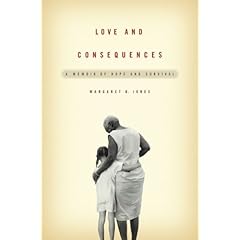
Love and Consequences by Margert B. Jones

Publishers should be kicking themselves. For the second time in less than a week, a critically-acclaimed memoir has been exposed as a fraud.

In "Love and Consequences," a critically acclaimed memoir published last week, Margaret B. Jones wrote about her life as a half-white, half-Native American girl growing up in South-Central Los Angeles as a foster child among gang-bangers, running drugs for the Bloods.

The problem is that none of it is true.

Margaret B. Jones is a pseudonym for Margaret Seltzer, who is all white and grew up in the well-to-do Sherman Oaks section of Los Angeles, in the San Fernando Valley, with her biological family. She graduated from the Campbell Hall School, a private Episcopal day school in the North Hollywood neighborhood. She has never lived with a foster family, nor did she run drugs for any gang members. Nor did she graduate from the University of Oregon, as she had claimed.

This story comes less than a week after it was revealed that the Holocaust memoir, “Misha: A Mémoire of the Holocaust Years” by Misha Defonseca, was a complete fabrication, and it's been only two years since most of James Frey's best-selling “A Million Little Pieces” was proven to be wildly embellished, exaggerated, and falsified. The accuracy of another best-selling memoir, “A Long Way Gone: Memoirs of a Boy Soldier” by Ishmael Beah are also being raised after series of articles by an Australian newspaper. (Beah, stands by what he wrote.)

What's going on here? Are publishers too lazy to investigate stories that seem too good to be true? Do authors feel their story won't be published or taken seriously unless they make up parts of their life?

Granted, memoirs are an imperfect art and are only as good as the author's memory. But there's a difference between recalling that an advent happened on a Monday when it, in fact, happened on Wednesday, and simply making up scenes, characters, or an entire life.

Whatever is happening, it's not good for the memoirs genre. Not only does it make it less likely that publishers will pass on memoirs in the future, but that readers are less likely to purchase a memoir when browsing bookstore shelves.

To restore readers' trust in the genre authors and publishers need to come up with a voluntary set of standards to which they're willing to adhere. Though not a comprehensive list, here are three ways to start.

1. If asked by the publisher, authors should be prepared to verify as much of the story as possible. This includes names and contact information of people who can corroborate the story, places, and approximate dates when events occurred. This may not always be easy to do if someone is writing about events that happened several decades ago but the author should be willing to authenticate as much as the story as possible. If authors knew there was a good possibility their story could be vetted before it hit the press, it would probably discourage liars like Seltzer and Frey from trying to get published.

2. Publishers need to be willing to investigate. If the scenes, dialogue, or the overall narrative sounds contrived or too good to good to be true, it's time to do some fact checking. Reviewers of Love and Consequences mentioned that the dialogue seemed "embellished" and scenes felt "self-consciously novelistic at times." Such red flags should lead the publishers to do some simple fact checking. A background check and a few phone calls could have been done quickly and revealed that Seltzer's story was a lie.

3. The reader should be notified up front if names and places have been changed or events have been compressed or told in a different order than they actually happened. Some memoirs have such a disclaimer but it's by no means an industry standard. If authors changed something, let the readers know why it was done. Such a disclaimer doesn't make a memoir any less powerful but goes a long way to establishing trust with the reader.

Memoirs can make powerful and entertaining reading. Standards would go a long way to rebuilding readers’ trust in a genre that is suffering from brazen acts of dishonesty and deceit. Without some standards in place, future memoirs run the risk of being bypassed by readers altogether, or worse, becoming classified as fantasized fiction.

Note: This article was originoally published at A Ton of Authors and a Wannabe blog

LOST: The Constant

Desmond

Since the last two episodes of LOST were below par, I worried that the show was headed in a downward spiral since it looked like the writers didn’t have a clue how to handle the new characters, flash forwards, and answer some of the questions that piling up.

Thankfully this show put everything back on track. Not only did we get to see more of Desmond and Penny (great characters and a beautiful, complex relationship), but we’re starting to understand what keeps the island hidden from the rest of the world. There’s obviously a time disconnect that makes it invisible to outsides unless they know exactly how to find it. And the show revealed that the island is about two days ahead of the freighter. The unanswered question, of course, is why.

Daniel Faraday, I think is going to become an increasingly important character and is probably the one most likely to help the crash survivors instead of completing their mysterious (and probably deadly) mission. It was nice that Desmond’s flashes included a little more background on this interesting individual. Let’s hope we get some flashbacks on him before too long.

The best part of the show, however, was the ton of clues that were dropped in about 15 seconds at auction where The Black Rock Diary was being auctioned. My ears perked up when the auctioneer said the contents of the diary were unknown except by its owner Alvar Hanso. Sound familiar? Alvar Hanso was the guy that founded The Hanso Foundation which financed the Dharma Initiative. The diary probably holds the secret of how to find the island. And now that Mr. Whitmore owns the diary, I’m willing to bet the freighter in the middle of the ocean is somehow connected to Penny’s father.