Widower Friends

Widower Needs A Friend

In the comment section of 10 Dating Tips for Widows and Widowers, Tyler writes:

I have spent a lot of time online getting information on grieving, etc. After a wonderful marriage of 21 years, I have found myself as a widower of a big six weeks. NO-I am not ready to move on! That is a long way off. I happened upon this site as I was searching other information. As I have read these articles, however, a question has been raised in my head.

I understand that the lonliness [sic] and emptiness is a big part of the grieving process. Is longing for a friend to talk to necessarily a bad thing? As noted in some of your articles, I understand that widowers are no different than other singles in how we need to treat women. (Quite frankly I am shocked that this would have to be said.)

As with many single people who are not looking to become involved but want to be active rather than festering at home, is there an appropriate way to approach this situation? Looking at it from the opposite point of view, if I were a woman approached by a guy like me wanting a "friendship" after 3-4-5 months of widowerhood, I would probably run away as fast as I could!

In my case there will absolutely be no intimacy until marriage, so that is not the issue. I would also never even approach someone even as a friend without my children's knowledge and approval.

Thoughts about approaching a "friend"?

I highlight this comment because Tyler’s comment reflects a lot of the emotional state recent widowers (including myself many, many years ago) find themselves in: they’re not ready to date or even form a serious relationship but they want to reach out to someone (preferably female) who they can talk to and connect with. Even if they aren’t intending to get serious with someone, they’re trying to connect on an emotional level that’s bound to lead to some kind of emotional/romantic attachment on his part or the woman he becomes friends with. The result is going to be an emotional disaster for one or both people involved.

So for women who are dating widowers keep Tyler’s emotional state in mind as you start a relationship with a widower—especially a recent one. Yes, some widowers are ready to move on but a lot of them are looking to rebuild the emotional connection they had before their wife passed away. This means you need to keep your eyes wide open when you date a widower. And if you feel the widower’s not ready to move on, don’t be afraid to end the relationship and let him know that you don’t feel he’s ready for a serious relationship.

For widowers who feel like Tyler, I can understand the need to talk to someone about what you’re going through. And if you don’t have a friend that has lost a spouse, finding someone who can relate to what you’re going through can be very, very difficult. That being said, if you don’t feel that any of your current friends are the sounding board you need, get some kind of counseling. Sure, it costs money, but you can get stuff off your chest without the risk of becoming emotionally involved with someone. Friendships become strong when they’re based on enough common interests to grow and develop. Loneliness and a broken heart always make for a poor friendship foundation.

Update:Due to some comments on this post, here's the response I sent to the poster:

What is the purpose of this “friend?” you seek? Are you looking for someone you can talk to about your grief or someone you can just hang out with occasionally?

In either case, why does this “friend” have to be a woman? Don’t you have any guy friends now that you can hang around with on occasion?

Instead of seeking out an individual person, why not join a club or some other group where there are a lot of people and start making friends that way.

Friendships develop when there are enough common interests to build something on it. Loneliness and a broken heart always make for a poor foundation to find a friend.

Pushing Out the Baby

Writing a novel is like pushing out a baby. Not that I have personal experience with that (I’ve only watched as Marathon Girl did all the hard work), but I feel happy and exhausted that the process is over. The novel’s on its way to publishers and agents. And I’ll be checkout out of the writing business for the month of November. Well, not entirely. I’ll be A/B testing different query letters, catching up on journal entries, and doing more blogging than I have been lately. But no NaNoWriMo for me.

Instead I’m going to spend a lot more time with the kids, watch V and football, get a night or two out with Marathon Girl, catch up on my sleep, and maybe take the family out of state for a few days so we can get away from everything.

Till later then.

Running in the Rain

Running in the Rain

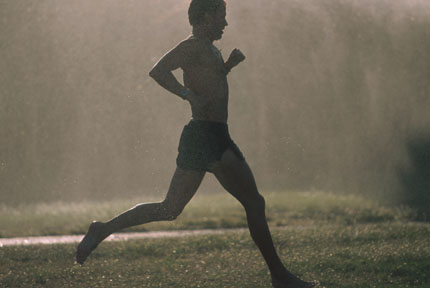
Years ago, during the dark period of my life, daily, morning runs were the only thing that kept me from falling into the abyss. Those early morning runs were a necessary not only to get me out of bed but give me the push I needed to make it through another day alone.

One January morning as I was getting dressed, I could feel the wind shake the house and listened as bits of snow and ice were thrown against the window. I knew it was going to be well below zero. I paused and thought about getting back under the covers for another hour or taking a hot shower. But inside I knew I had to run—even if only a couple miles—because I knew that staying home and doing nothing would be worse in the long run.

So I put on extra layers and headed out into the cold. Thirty minutes later I finished a four mile run. Even though I was chilled to the bone, I felt like I had just climbed Mt. Everest. There was something about enduring the elements that made feel like I could take on whatever life was going to throw at me.

Ever since then I’ve enjoyed running when the weather is less than perfect.

Especially the rain.

There’s something invigorating about having big drops of water splashing in my face and soaking my clothes. I love splashing through puddles as I run and feeling my hair stick to my face.

Part the reason is because rain in Utah is a rare treat. When it does rain, it comes in 10 minute or 15 minutes bursts before the sun returns. Seldom have I been able to do an entire run in a good rain.

So as soon as I saw the ran coming down last week, I quickly got into my running clothes and headed out the door, hoping that it would last for a mile or two.

By the end of the first mile there were still gray clouds everywhere and it showed no signs of letting up.

By the end of the second mile I was soaked and loving my run, happy that it was raining harder than it was when I started.

By the end of the third mile I looked to the west and could see the end of the storm.

So I picked up the pace, determined to finish the run before the rain stopped and the sun came out. Seconds after finishing the fourth and final mile the rain stopped and the sun came out.

Breathless I pumped my fists in the air, grateful that I been able to enjoy 30 minutes of running in the rain and had another a chance to remind myself that whatever challenges I’m going through, I will overcome them.

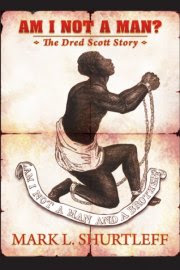
Am I Not A Man? The Dred Scott Story

Am I Not A Man? The Dred Scott Story by Mark Shurtleff

Even though I love history, I rarely read historical fiction. The reason? I’d rather read a well-written historical account of real people than a book about made up people living during past events. But when asked if I was interested in an advance reader’s copy of Am I not a Man? The Dred Scott Story I agreed to read and review it since I was curious to see if Utah Attorney General, Mark Shurtleff, could pull off a compelling account of a real people and events and put them into novelized form.

Much to my surprise, Shurtleff did a good job of weaving his research with his storytelling abilities. The result is a compelling read that tells the story of Dred Scott while examining the complex issue of slavery in the United States.

(For those who need of a quick history refresher, Dred Scott was slave who sued for his freedom. The result was the infamous Dred Scott v. Stanford decision where the Supreme Court ruled 7-2 that persons of African descent could not be considered citizens of the United States under the U.S. Constitution.)

Am I not a Man? gives a detailed and fascinating account of the life of Scott and his fight for freedom and equality. What makes the book worth reading isn’t just learning about Scott’s undying desire to become a free man, but the human face Shurtleff puts on Scott, his family, his supporters, and his enemies. People are always complex creatures and Shurtleff does a good job of making Scott and others come alive in the book.

Shurtleff also does an excellent job of describing the complex issue of slavery and the strong emotions it evoked in people on both sides of the debate. After reading Am I not a Man? it’s easier to understand why the issue tore families apart and let to the costliest war the United States has ever fought.

Since Shurtleff is an attorney, he does a great job of unraveling the reasons behind the Supreme Court’s decision and examining the legal and political consequences—the biggest one being the election of our nation’s greatest president—Abraham Lincoln. But even when talking about reasons for the decision, Shrutleff is able to telling them in such a way that the reader is seldom, if ever, bored.

My only complaint with the book is I wanted to know how much literary license Shrutleff took some of the characters and certain incidents in the book. Shurtleff does go out of his way to say that the book is historical fiction and based upon real people and his own research and that some liberties had to be taken—just not how much. (So, Mark, if you ever read this, I’d love to sit down with you and talk about how you weaved this story together. It’s more to satiate my own curiosity about the writing process.)

Despite this one issue, I found the book to be a worthwhile read and would recommended it not only to those who enjoy historical fiction but also to those who enjoy stories of people with unconquerable spirits to fight injustice and inequality.

The lessons of Am I not a Man? are just as relevant today as they were during Scott’s life. Freedom is something that is easily taken away but not easily regained. The fight for freedom is difficult to obtain and often takes a lifetime of blood, sweat, and tears to achieve. Scott’s story is a good reminder that freedom comes with a price and we should always be vigilant to protect it.

Four stars (out of five) for Am I not a Man? The Dred Scott Story by Mark Shurtleff.

UPDATE: The publisher is classifying Am I not a Man as an historical novel rather than historical fiction. The history is accurate but the literary license Shurtleff was in the dialogue.

Fathers and Sons and College Football

Weber State Wildcats Football

One of my earliest memories is attending a college football game with my dad. I was four or five at the time when he took me to Romney Stadium to watch Utah State take on BYU. I don’t remember who won but I do remember sitting near the top of the stadium watching a packed stadium of people enjoy the game. I also remember feeling really special that I could go to such a big event with my dad who was usually busy working to support a family and trying to finish his MFA.

As the years passed, my dad and I bonded a lot over football. There were Denver Broncos games that were watched fairly religiously every Sunday and a period of a few years when I was a teenager when he bought a family pass to Utah State games and most Saturdays would take the hour drive to Logan and watch most of their home games. Those were good times--even if Utah State fielded an awful team (and even worse schedule) year after year.

Though I don’t watch as much football as I did ten or even fifteen years ago, I still watch it and, recently, the two oldest boys have enjoyed watching it with me. After seeing their interest in the sport (or at least their interest in spending time with Dad), this weekend I took them up to Ogden so they could watch their first college football game and get some good bonding time with dad.

Taking 5- and 3-year-old boys to a game was somewhat of a gamble since I didn’t know if they’d have an attention span to sit through a three hour game. Unlike watching a game at home where they can sit on the couch for five minutes, go play with toys, and then come back to the couch, they wouldn’t have many entertainment options at the game.

On the other hand, if I was going to take them to a game, Weber State games are a great environment for kids to develop an interest in the game. Since Weber State plays in the football championship subdivision and has three Division I teams within a 90 minute drive of their stadium, most college football fans in the state don’t even know or care what the Wildcats are doing. The fans that do show up are passionate without being over-the-top about their team. And since the 15,000 seat stadium is usually half-full, there’s plenty of room for little kids to spread out and run around if they get restless. And since the stadium is small, there’s not a bad seat in the house so they’re always close to the action.

We showed up to the game 10 minutes before kickoff. I bought the boys some kettle corn and something to drink and we settled into the general admission seats just as the game started.

The boys were too busy munching kettle corn to pay much attention to the first few minutes of the game. But once the settled down, I was surprised by how much they actually watched the game. They learned to cheer when “the purple team” did something good and “the white team” messed up. By halftime the 5 year old was able to read the scoreboard. And in the third quarter, when the 3 year old got tired, he simply used Dad’s leg as a pillow for a quarter but kept his eyes on the field and would occasionally ask a question about what happened.

But they were both awake and active through the fourth quarter, and, in the end, they sat through the whole game. And even though Weber State lost, as we climbed in the van to go home both boys told me how much fun they had and asked if we could go to another game soon.

I told them there was another game in two weeks and, if they wanted, I’d take them to it.

The boys excitedly said “Yes!”

As I drove home and listened to the boys talk to each other and laugh, I realized that, as a dad, I couldn’t have asked for a better afternoon with my sons.

Death do us part; then on to Match.com

Dating a Widower I got a brief mention in a Florida Weekly dating column on widowers making the transition to a new relationship and the challenges that come with it. My "Dating a Widower" Facebook group even got a mention. :-)

Vicki Kennedy makes for a striking widow. Now that she's said she won't fill her husband's senate seat, she has stepped firmly into the national conscience as a public figure of grief. The First Lady holds her hand at presidential conferences and liberals everywhere speak her name at prayer circles. At 55, she might some day remarry. But the odds are against it.

If things were different and Vicki passed before Teddy, chances are he'd be married this time next year. In fact, men are four times more likely to remarry after losing a spouse; 61 percent of men start dating within the first two years, compared to just 19 percent of women. It's ironic that the same men who hem and haw about being dragged into marriage — there's a reason women set ultimatums — are the ones who rush to find a ball and chain so soon after losing their spouse.

You can read the entire article here.

"Third" Chapter 1

Since I keep getting questions about the status of my novel, here's an update: I’m still waiting on a handful of chapters from my wonderful editor. In the meantime I’m making a few minor adjustments to the rest of the book. I anticipate being able to market it to literary agents and publishers by the end of the month. In the meantime, since you've all been patient with my lack of blog posts, here's the first chatper. Enjoy!

Third Chapter One

The tram’s doors hissed open, flooding the platform with the heat and stench of a hundred human bodies packed tightly together.

Standing on the platform, Ransom Lawe put a hand over his nose and mouth as the air washed over him. He took a step back, waiting for the passengers to exit. Only a gray-haired man wearing a patched, navy blue suit pushed his way toward the exit and off the tram. He held a worn leather briefcase above his head. Once the man’s feet touched the platform, the waiting crowd shoved its way up the stairs and onto the tram.

Ransom took a deep breath and surged forward with the others. Once on board, he used his mass to push toward the missing window opposite the door. Most of the tram’s windows were rusted shut from years of neglect, and though closed windows were nice in the winter, at this time of year they turned the trams into cauldrons of heat. The second car on the tram Ransom caught to the Recycling Center each morning had a back window that had been broken for years, allowing the hot, dusty air to flow through the cabin and provide some relief.

Ransom reached the window just as the bell above the door gave out a sharp ring and the door snapped shut. Setting his metal lunch bucket on the floor, he grabbed a handrail just as the tram surged forward.

A hot breeze began drying the sweat from his face and he took a deep breath of the dusty air, happy to have a momentary reprieve from the stench-filled car. Glancing around at the other passengers, he was bored to discover that most looked familiar. There was the man with the pock-marked face who wore the same bowtie every day and always got off on the 23rd Street stop. The woman with short hair and coffee-colored skin who always had her nose in a worn paperback. And the three employees wearing blue power company uniforms who stood in a tight circle at the back of the car, talking. They were people he saw every day on his commute to work, but he knew none of their names—strangers brought together by the thirty-minute ride into the heart of the city where it seemed almost everyone worked. No one made eye contact. Instead, they stared out the dirty windows or looked down at the floor in silence.

The lucky ones sat on blue plastic benches that ringed the inside of the tram. Ransom looked down at the two women who sat in front of him. They wore identical work uniforms—black slacks and white blouses with the word Census Bureau embroidered across their left pockets in black lettering. Ransom recognized the narrow-faced older woman, her blouse yellowed around the collar from sweat and age, but he hadn’t seen the other woman before. She seemed like a duplicate of her companion, only without the crow’s feet and the permanently etched worry lines across her forehead. The younger woman’s blouse was clean and pressed. Ransom figured she must be the older woman’s daughter, and also a recent Census Bureau hire. There was no other way to account for the snow-white blouse. The tram arrived at the next stop, where the platform was packed. As the doors opened, a dozen people headed toward the exit and off the tram. Then the new passengers pushed forward. It was obvious there wasn’t going to be enough room for everyone.

For the better part of a minute, people tried to force their way onto the tram. Ransom could feel the crowd press against him. He held tight to the handrail, determined not to lose his spot by the window. The bell rang. The doors tried unsuccessfully to close. Over the crowd, Ransom could see three people holding the tram’s rear doors open as they fought for room. The bell rang a second time and the tram began moving forward. Two of those trying to board let go as the tram picked up speed. The third man held on to the railing, probably hoping to make it to the next stop. But a hand from the woman directly in front of him shot out and caught him on the shoulder. The push caught him off guard and he tumbled onto the platform as the doors banged shut.

Ransom peered out the back window as the tram sped down the tracks. The man who had been pushed off leaned up on his elbows and thrust his middle finger at the departing car. Two dozen disappointed passengers still remained on the platform behind him. Half of them watched the tram speed away while the rest looked in the opposite direction, most likely hoping to catch sight of the next one.

A baby’s loud, piercing cry surprised Ransom. Looking toward the front of the car, he tried to catch a glimpse. At six foot five inches, he was taller than most of the passengers but still couldn’t manage to see the baby or mother. He did, however, notice that several riders near the front seemed to be looking toward the left corner of the tram. The woman and her child must have boarded early enough to land a seat.

The tram pulled up to the next platform and stopped. Between each wail, Ransom could just make out the frantic hushes of the mother trying to quiet the child. It didn’t help. The baby’s cry became louder and more acute. Ransom felt bad for the mother. With the heat and smell of the tram, he couldn’t blame the baby, though he did wonder what the woman was thinking, bringing a child onto a packed morning tram.

"I wish it was illegal to bring kids on these things," a female voice said.

Ransom looked down at the bench in front of him, thinking that one of the two women was talking to him.

"Why’d she even bring it?” the younger woman asked, looking at the older one. “Doesn’t her building have a care center?”

“From the way it’s crying, it sounds like it wants attention. Maybe it’s a third and she doesn’t have enough time to care for it properly,” the older woman guessed, her voice full of contempt.

Ransom felt a flash of anger at the woman’s comment, but didn’t say anything. Instead, he bit his lower lip and stared out the window. He preferred not to hear more of their conversation, but they were sitting too close and he couldn’t just move to another part of the tram.

The doors swung shut again and the train lurched forward. The baby continued to howl. Ransom did his best to put the women and the baby out of his mind. He leaned forward into the dry air.

The tram came to a sudden stop. The tightly packed passengers stumbled in one mass toward the front of the tram. Ransom gripped the handrail tightly to avoid being thrown. As he looked around, he noticed that everyone seemed to be okay. He leaned his head out the window to see what was going on, his knees bumping those of the older woman as he did so. “Hey, watch it!” she barked, but Ransom ignored her. Fifty yards ahead was the 12th Street station. A crowd of people stood on the platform, staring at the stopped tram. He turned and looked down the tracks. A tram heading the opposite direction was stopped about twenty yards down the line. That could mean only one thing: a power failure.

He pulled his head back inside and checked the time. It was quarter to eight. He still had fifteen minutes to get to work. If he started walking now, he might make it on time.

The infant’s cry, which had come to an abrupt end when the tram stopped, started up again.

“Open the doors!” a man shouted somewhere near the front of the car. His voice was loud and momentarily drowned out the baby’s wails.

“Be patient. The power will be back on in a minute,” suggested a female voice from somewhere in the middle of the tram.

“Shut up!” the man retorted. “Some of us have places we need to go.”

Two men who were pressed up against the middle doors turned and tried to pry them open. Things were quiet for a beat. Then the baby let out another scream. Ransom looked at the men struggling with the doors, hoping they’d open them soon. A bit of fresh air and more space was what everyone needed.

“I don’t care if it’s sick,” the man blustered. “I have a right to ride to work without your little parasite screaming in my ear.”

There was another pause, then something that sounded like the mother trying to hush her child. The baby continued to cry.

“If you won’t shut it up, then I will!”

There was the sound of scuffling, followed by the cry of, “Give me back my baby!”

Ransom looked to the front. A large, muscular arm held the infant high in the air by one of her legs. The baby looked about two months old. She had dark eyes, olive skin, and a large mat of brown hair that hung in loose strands toward the ground. She wore pink shorts. The bottom of her white T-shirt hung down to her neck, exposing her soft belly. He couldn’t see the face of the person holding her, but the man’s cruelty was obvious.

The baby quieted for a moment, seemingly surprised to find herself upside down. Then she turned crimson and another cry burst forth.

A more delicate arm reached up and tried to grab the child, but it was quickly swatted away. The man with the deep voice chuckled. “A breeder like you needs to be taught some parenting skills, like how to rock it to sleep.”

The man swung the little girl back and forth by her leg. Ransom cringed as the baby’s head just missed the front wall of the tram.

“Give her back now!” the mother screamed.

“I’m just rocking it to sleep,” the man said. “As soon as it shuts up, you can have it.”

“If you don’t give her back now, I’ll kill you!” the woman screamed.

Ransom felt a bead of sweat run down his back. He glanced over at the men who had been trying to open the door. They’d stopped working and were staring toward the front of the tram. Just about everyone was trying to get a glimpse of the commotion, but no one made a move to step in. Helping out was simply asking for trouble, of course. Better to mind your own business and go on with your life. Ransom looked down at the lunch bucket between his feet.

“Don’t threaten me, breeder,” the man snarled. “Or I’ll bash its head!”

The man swung the baby far enough that her head lightly struck the wall. It was so quiet on the tram that the small thud echoed through the car. The baby’s face puckered up and she let out a piercing cry.

The woman screamed. Once again, her arms reached for the child. The man raised his free hand and brought it down on the woman. There was the sickening sound of flesh meeting flesh.

“Try that again, and I’ll spill its brains all over the floor!” The man’s voice rumbled through the car like thunder.

Ransom found himself pushing toward the front of the tram. He ignored the cries and cursing from the other passengers as he shoved them to the side. In seconds he stood across from the man, the baby, and the woman.

For the first time, he got a good look at the mother. She was probably five-and-a-half feet tall, with an olive complexion like her daughter. Her black hair was pulled back into a ponytail, and she wore a tiny gold cross just above her small breasts. Her right eye was swollen and puffy, and blood ran from her nose onto a navy blue T-shirt. Her fists were clenched and her eyes filled with anger.

The man holding the baby had small, deep-set green eyes. His shaved head glistened with sweat and the muscles in his arms and neck pulled at the sleeves and collar of his black shirt. He looked to be Ransom’s size, even though Ransom had a good five inches of height on him. He wore black boots and black pants. Around his waist was a belt containing handcuffs, mace, and a nightstick. A silver shield with the Census Bureau logo imprinted on it was pinned to his front pocket.

Ransom paused. Census Bureau Sentinels only had jurisdiction when it came to population crimes. But they had the reputation of having little respect for the law when it suited their purposes, so their jurisdiction usually didn’t stop them. They were commonly known for their strength, fierceness, and cruelty. They inspired enough fear that even the police rarely bothered to investigate complaints against them. When it came to sentinels, the unspoken rule was to leave them alone and hope they’d do you the same courtesy.

The baby’s continued screams drew Ransom’s attention back to the child. Her face was bright red. Two steady streams of tears ran from her eyes and down her forehead to the floor. She was just out of reach.

Another two feet forward and to his right, Ransom could at least make a grab for the child. He took a half step toward the child when the deep voice of the sentinel reverberated through the car.

“Move any closer and I’ll drop the baby on her head.”

Ransom stopped and faced the sentinel. He stared at Ransom through his tiny green eyes. “Back up,” the man barked. “This matter doesn’t concern you.”

“Give the baby back.” Ransom did his best to keep his voice flat and steady.

The sentinel’s eyes betrayed a faint element of surprise. He likely wasn’t used to someone talking back to him.

“If you know what’s good for you, you’ll mind your own business,” he said, looking back at the baby as though the conversation were over.

“Give the baby back to her mother,” Ransom demanded, his voice rising.

Now Ransom had the sentinel’s full attention. His eyes went from Ransom’s face to the Recycling Center logo on Ransom’s breast pocket.

“Are you kidding me? You’re a just a recycler. Why don’t you go pick up some trash?”

Ransom ignored the taunt. “I’m not going to ask you again.”

He took a step toward the sentinel so there was less than three feet between them. Out of the corner of his eye, Ransom saw the mother move closer. The sentinel saw it too. His eyes darted from the mother to Ransom, then back to the mother. He seemed to realize that he couldn’t stop both Ransom and the baby’s mother from grabbing the child.

Without warning, the sentinel pushed the mother, dropped the baby, and lunged at Ransom. The woman’s head made a dull thud as it smacked against the window. Ransom ducked under the sentinel’s arm and managed to catch the infant just before her head hit the floor.

The mother sat up and rubbed the back of her head. She looked at Ransom, then rose to her feet and grabbed the baby from his arms. She retreated to the corner of the tram, where she held the child close to her breast.

The baby stopped crying.

Ransom stood and turned to face the sentinel, who had fallen into the crowd and lay atop three passengers. Everyone else was backing up, trying to get out of the way.

The sentinel rose to his hands and knees and shook his head. He grabbed a handrail and pulled himself to his feet, turning to face Ransom. Then he caught Ransom unprepared, his swing connecting with the side of Ransom’s jaw, despite his failed attempt at ducking.

Ransom felt his mouth fill with the coppery taste of blood. His legs gave out from under him and he found himself facedown on the tram’s floor. Then there was a sharp kick to his side. The air rushed out of his lungs and he curled up, fighting for breath.

Two strong hands grabbed him by the shoulders and flipped him on his back. The sentinel looked down at him with a smirk on his face. A bead of sweat fell from his forehead and landed squarely on Ransom’s chest.

“I told you to mind your own business,” the sentinel growled. “Maybe next time you’ll listen.” He raised his leg, positioning his boot over Ransom’s face.

Ransom instinctively raised his arms and waited for the blow.

It never came.

Through the spaces between his fingers, Ransom caught a flash of silver, then the sentinel swatting his neck as if bitten by a mosquito. Ransom lowered his hands and saw the sentinel staring at a small object between his fingers. It was about an inch long, half of its length in the form of a thin needle.

The sentinel glanced in the direction of the woman and opened his mouth to say something, then suddenly grabbed the pole next to him for support. His body swayed from side to side before he fell to his knees. Eyes rolling to the back of his head, he fell on the floor, face-first, next to Ransom. It was absolutely quiet on the tram.

Ransom pulled himself to his knees. He could feel his breath coming back to him. He spat blood out on the floor. His jaw hurt and a few of his back teeth felt loose.

He looked over at the woman, confused by what had just happened.

Suddenly, the sounds of the men trying to open the doors started up again. Moments later, there was a hiss and the middle doors were forced open. A blast of fresh air rushed through the car.

The passengers made for the exit as fast as they could.

The woman picked a yellow sling from the floor and put it over her shoulder. A drop of blood fell from her nose to the fabric. She placed the baby in the sling and stepped over the body of the sentinel, heading for the exit.

“Wait,” Ransom called.

The woman turned and looked at him.

“Thank you for saving my baby,” she said. “One day I’ll repay you.”

“What did you do to him?” Ransom asked, looking at the motionless body.

“Thanks for reminding me.”

She knelt next to the sentinel and pried open his hand, retrieving the silver object. She slid it into her pocket, then pulled herself to her feet and checked the baby, brushed the dust from her pants, and headed toward the door.

“Who are you?” Ransom tried again.

“He’ll wake up soon. You should get going.”

“Wait,” he called, but the woman had hurried down the steps of the tram.

Ransom pulled himself to a standing position. His jaw and side throbbed with pain. He staggered to the tram’s open doors and spotted the woman thirty yards down the street. She was walking fast, weaving her way in and out of the throngs of people. Ransom hurried down the stairs and started after her. He was still winded and stiff from the fight. Within twenty yards, he had to put his hands on his knees while he caught his breath.

When he looked up again, she was gone.

Then he heard a high-pitched police whistle. Three cops were running down the street toward the tram. The middle one had a silver whistle between his lips that he blew as he ran.

Quickly, Ransom got in the back of a nearby line. Once the police ran past, he hurried down the street as fast as he could walk, anxious to put as much space between him and the tram as possible. It wasn’t easy. He was still dazed and hurting, and the sidewalks were crowded with people going to work, groups of kids in their yellow-and-green uniforms hurrying to school, and people standing in line waiting for the grocery stores to open. To make faster progress, he stepped off the sidewalk and walked in the gutter. But even that path had obstacles. Donkey carts were parked in front of stores, their drivers unloading burlap bags filled with produce and supplies. There were piles of manure—some fresh, others days old—that had been swept to the gutter but not yet collected. Ransom ended up back on the sidewalk.

As his distance from the tram increased, Ransom’s adrenaline ebbed and was replaced by fear. He wondered if the sentinel would be able to give the police a good description of him. The man had seen his uniform and knew where he worked. If police showed up at the recycling center, it wouldn’t be too hard to figure out who he was. It was a rarity for people to be much taller than six feet. As far as Ransom knew, he was the tallest employee at the center.

He chastised himself for intervening in something that wasn’t his business. The last thing he and his family needed was for him to miss work and spend a few weeks in jail. Money was tight enough as it was. What had he been thinking?

A pack of stray dogs ran out into the street. The lead dog, a German shepherd with spots of fur missing from his body, looked at Ransom with sad brown eyes. Ransom reached down to the gutter and pretended to pick up a rock. Immediately, the pack of dogs turned and ran across the street. Ransom checked his watch. It was eight o’clock. He was late for work.

Ignoring the pain in his side, Ransom picked up the pace and hurried the remaining eight blocks to the Recycling Center.

***

Copyright 2009 Abel Keogh. All rights reserved. Republication of this work is prohibited without writen consent of the author.

Family Runs

It’s no secret that Marathon Girl and I love running together. Some of our first and best dates were waking up at 5:00 a.m. and enjoy long runs together. Even after six years of marriage, we like the bonding experience that comes from spending 30-60 minutes running side by side. As our family’s grown, however, running as a couple has been more and more difficult. After the birth of our first child, we bought a running stroller and were still able to run together several times a week. But after second and third child arrived—and we bought a double-wide running stroller to compliment our single one—running together become something we’d do every week or 10 days together.

Then number four came in January and having the chance to run together came to a screeching halt. There were too many kids and not enough running stroller seats to make running as a family feasible.

It was hard not having time running together. It was time that Marathon Girl and I needed—even if it was only once a week.

Then two months ago our oldest learned to ride his bike without training wheels. While we were watching him zip up and down the sidewalk the idea came to Marathon Girl that maybe he could keep up with us as we ran. So the next day she took him on a test run/ride with found out that not only could he bike our four mile course without any difficulty, but he could ride faster than she could run.

So we started we started weekly family runs. We put the younger three in the running strollers and the oldest on his bike. It’s worked out so well that it’s something our three oldest kids really look forward to. (Number four is too young to express an opinion. He usually falls asleep a few minutes into it. I guess that means he likes it.) I get home from work and all three kids run into the garage and excitedly tell me that we’re all going for a family run then climb in the running strollers or get on their bike in anticipation.

I’m glad the kids like it and hope it’s something we can continue for years to come. It’s turned into nice family time and give Marathon Girl and me a chance to reconnect in a way that brought us together in the first place.

Love Happens: A Movie About Me And Marathon Girl???

Looks like lots of simliarities between the trailer for the movie Love Happens and my own life. Of course my book came after I met Marathon Girl and everything in the book actually happened. But MG is just as cute, if not cuter, than Jennifer Aniston. Even though it's a chick flick, I just might have to see this show with MG. :-)
LOVE HAPPENS: Movie Trailer - The funniest videos clips are here

5 Tips for Making a Good Book Trailer

Having worked in marketing for nearly a decade, it’s been interesting to watch people and companies jump on the “latest and greatest” way to improve their marketing ROI without taking the time to understand what they were getting into. Take blogging, for example. I started a personal blog in 2000. I blogged because I liked the idea of sharing my thoughts and ideas with friends and family members. When I told people what I was doing, most of them just raised their eyebrows and wondered why I was doing something like that. Quite by accident, I started getting a following and learned the ins and outs of what it took to attract and keep a following.

A few years later blogging become the thing to do. Not only was everyone encouraged to have a blog but businesses were told they needed to have a blog in order to attract new customers, and fill their sales pipeline.

So everyone started blogging without understanding or knowing what they needed to do to make their blog successful. They just started doing it. As a result people spend a lot of their time blogging only to give it up once they realized no one was reading it. On the business side of things, CEOs and VPs of marketing become frustrated because they weren’t seeing the magical results that all the business magazines and websites told them blogging would give them.

The problem was that both people and businesses started blogging without a rhyme or reason. Rarely did they have a target audience in mind, a focuses message, or a way to measure the success of their blogs. Instead they did it because everyone else was doing it.

So what does this have to do with book trailers?

In the book publishing world, book trailers are all the rage. Every publisher and author are creating them in hopes of propelling their book to the #1 spot on the New York Times bestseller list.

For those who haven’t seen one book trailers are like movie trailers in that the try to generate excitement for an upcoming book. Everyone is doing them but, like blogging became the rage years ago, no one has the slightest clue whether or not these trailers are successful at selling books. Still, that fact hasn’t stopped people from shelling hundreds or thousands of dollars to make one.

(Full disclosure: Yes, I want a book trailer for my upcoming novel. I wouldn’t even mind one for Room for Two. But I also don’t want to waste my money or my publisher’s money on one unless it we can have some way to measure how effective it is.)

After having watched hundreds of book trailers over the last couple months, I’ve noticed some good, bad, and downright ugly ones and have compiled a list of 5 tips for publishers and authors should follow when they decide to make a book trailer.

1. Don’t Make A Mini Movie

It’s one thing when Hollywood takes a book and adapts it to the big screen. It’s something else when a publishing or marketing company tried to sell a book by making a mini movie from a scene. Because reading a book is an intensely personal experience, readers have their own ideas about what the characters look like. When you try to reenact a scene from a book, it’s doesn’t work. I almost cried when I saw the following book trailer for Michael Connelly’s novel The Brass Verdict.

That wasn’t the what I pictured the characters at all. Not only that, but the whole thing seemed poorly produced – something you wouldn’t expect considering they were promoting one of best active writers and storytellers.

If you want to see the book on the big screen, then option the rights to Hollywood. Don’t try to make mini movies from the book you’re trying to promote. It’s generally doesn’t work.

Don’t misunderstand. I’m not saying don’t use video. I’m just saying don’t reenact scenes from books. To their credit, I think the trailer from The Brass Verdict where the narrator reads the opening chapter of the book works since it’s not action or character driven. It helps set the tone for the book and doesn’t concentrate on what the narrator actually looks like.

2. Make them short and to the point.

Most commercials run 30 seconds or less. A good radio ad can get its point across in about the same time. Most of the best book trailers I’ve seen run 60 seconds or less. Check out the one below for Wake by Lisa McMann. At 61 seconds I think it does a decent job of generating interest book.

Here’s one for Behold the Dawn by K. M. Weiland. It runs a little over two minutes. The production values are good but the middle half drags. Could have cut 45 seconds out of it and made it even better.

3. Always have a call to action

The purpose of a book trailer is to generate excitement for a book and get people to either buy it or want to learn more about it. About 70% of the book trailers I’ve seen don’t have a call to action. At the very least they should tell the viewer where they can go to by the book and a URL to the author’s or publisher’s website where you can read the first three or four chapters of the book. Even better if they can provide a direct link to a website to take the next step.

Here’s the trailer for Skinned by Robin Wasserman. Pretty decent trailer in that it’s under a minute, does a good job of generating interest in the book and even gets third party validation on why it’s a good book. However, note the lack of call to action at the end.

Sadly most book trailers are this way. In fact I struggled to find one with a good call to action. That doesn’t mean it’s not out there. Leave a comment below if you find one and I’ll post it!

4. Use Analytics to Get Data

Okay, this one’s for marketing geeks. Data rules the marketing world. As an author or publisher, wouldn’t it be nice to know how many people watched the whole trailer or many of them stopped watching halfway through? Would it help you to know many of them links to buy the book or downloaded the first couple of chapters? This information is not only vital from an ROI standpoint but can help you make future trailers better.

And don’t tell me it’s not impossible to get analytics information from Flash or video. It’s not. The company I work for has the technology to do it if it’s hosted on a website you control. Successful marketing is always about learning what works and what doesn’t. Book trailers are new enough that no one had an exact handle on the best way to make one. Good analytics can help improve the process.

5. Sell the story, not the author

Unless your Stephen King or JK Rowling or another author with a dedicated following your name and/or face isn’t enough to make books fly off the shelves. Therefore you need to sell the story and make it tantalizing enough that people want to at least pick up the book. That means no pointless interviewing or face shots of the author in the book trailer. It has to be about the story!

Take Jodi Picoult’s Nineteen Minutes. Not only is it too long, she interjects herself about 35 seconds in and interrupts what is, up to that point, a decent beginning to a book trailer. (See also narrates it which, in my opinion, in generally a mistake.)

The creative team behind Stephen’s King’s Duma Key book trailer concentrated more on the story than King’s name. The result? A great book trailer that’s only 32 seconds long!

Don’t misunderstand. I’m not against post interviews with authors and putting them on the web. For the fans, those are great ways to keep them active and interested in the author and his or her work. As promo pieces, however, they fall flat.

So there you go – 5 tips to making good book trailers. If any of you have book trailers your particularly fond of, drop me an email or link to them in the comment section below.