The World’s Worst Book Covers

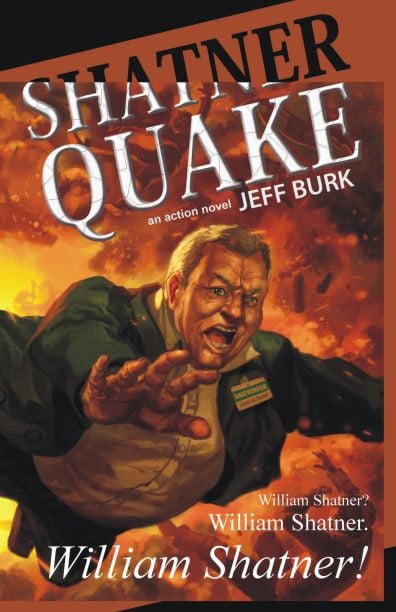
Shatner Quake: A Horrible Book Cover

While looking for a book cover for my post on self publishing, I stumbled across a blog run by a former librarian dedicated to “truly hideous” book covers. Then again, the subject matter of some of these books derserve awful covers. (William Shatner? Shattner Quake? What the...?)

Unless you’re self publishing, the cover is one of the few things out of the writer’s control of the final product. Bad covers can make a good book unappealing. That’s why any publisher will contract with or employ talented graphic designers to make their books pop off the shelves. Whoever did the covers on these blogs should be fired.

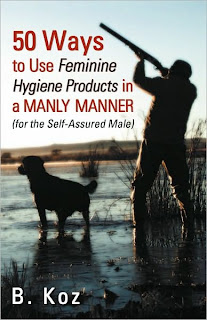
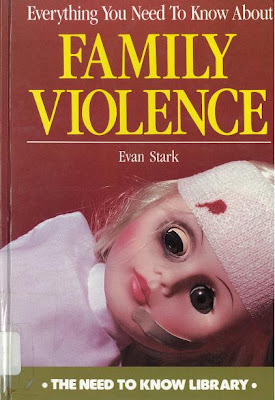
Just a few bad book covers you can find at that blog are the following.

Awful book cover

Bad book cover

Crappy book cover

You can see more bad covers here. Happy looking (or not).

Marathon Girl is Marathon Girl Again

Marathon Girl

Congratulations to Marathon Girl who completed her fastest marathon time in five years, finishing in a Boston Marathon qualifying time of approximately 3:28.13. I say approximately because that’s what her stopwatch read said when she crossed the finish line. Her official race time, however, isn’t posted on the official race result site for some reason.

We’re contacting them to see what happened. Hopefully we can figure out why her race time wasn’t posted along with everyone else. Marathon Girl wants to run Boston and even though she could run another marathon and quality without too much difficulty, she does want her race time to count in case she’s unable to run another marathon before Boston.

That aside, it was great to cheer Marathon Girl on as she crossed the finish line and to see the smile on her face after she realized how fast she was running again. She trained hard for this marathon and it was nice to see all of her hard work pay off.

Update: The went through the data and found Marathon Girl’s time. It’s officially 3:28:49.2 or about 7:58 per mile! Updated results here.

Judging a Book by Its Cover

The Wall Street Journal has a fascinating article on how ebooks and other book-publishing technology are shaking up the business model traditional book publishers.

Amazon has taken an early lead, providing service tools for authors to self publish and creating an imprint last year to publish promising authors in print and online.

This month, Amazon is upping the ante, increasing the amount it pays authors to 70% of revenue, from 35%, for e-books priced from $2.99 to $9.99. A self-published author whose e-book lists for $9.99 on Amazon's Kindle e-bookstore will receive about $6.99 for each book sold. The author would net $1.75 on a similar new e-book sale by most major publishers.

The new formula makes digital self-publishing more lucrative for authors. "Some people will be tempted by the 70% royalty at Amazon," [Richard] Nash says. "If they already have a loyal fan base, will they want 70% of $100,000 or 15% of $200,000 for a hardcover?"

Digital self-publishing, or "vanity" publishing, is creating a powerful new niche in books. WSJ's Geoffrey Fowler joins the Digits show to discuss how this is threatening the traditional book industry.

Traditional book-industry players and tech companies are jumping on the digital self-publishing bandwagon. Apple last week announced a digital self-publishing program for its iPad giving 70% of revenue to authors, similar to Amazon's formula. Last month, Barnes & Noble also announced a service called PubIt!, allowing authors to post and sell e-books online.

While traditional publishers aren’t going the way of newspapers any time soon (though they’re slowly heading that direction), the shift to digital publishing is going to be a boon for talented writers. Published authors with an established fan base can sell their books for less than traditional publishers while making more money per book. New authors in the process build a fan base have another way to market manuscripts that aren’t under contract.

Talented unpublished authors can get around the often lengthy and cumbersome process of finding an agent and working with a publisher. If they have a compelling story to tell, they can immediately start selling books and building a fan base.

Of course not every self-published book will do well. As the WSJ article notes, self published books are generally poorly written and lack an editor’s touch. But in the new publishing paradigm, talented writers can hire editors to go over the book to improve the story and writing.

It’s also makes it easy for authors to overcome the second problem self-published books face: crappy covers. We’ve all be told never to judge a book by its cover, yet we do it all the time. If someone’s going to take a self-published book seriously, it needs a cover that’s going to make people want to pick it up or, with ebooks, at least read the first chapter or two. (And for those who say they never judge books by their covers, would you even consider reading a book with covers like these? Be honest!) Thankfully, there are plenty of talented graphic designers out there who can create a compelling cover for a couple hundred bucks. You have a professional look and copy and you’ve overcome two big obstacles that self published writer and books encounter.

Going the self-published route isn’t the best option for everyone right now. But it’s become a more viable business model for talented writers. That being said, I’ll be testing these new self publishing waters later this summer with a short, niche book of my own.

Stay tuned for details.

Handling Setbacks with Class

Last week a blown call by umpire Jim Joyce cost the Detroit Tigers Armando Galarraga a perfect game—one of the rarest feats in baseball. (See video above.)

As a lifelong Tigers fan, I’m used to seeing my team end up on the wrong side of history. (Two other Tiger pitchers have lost perfect games with two outs in the ninth.) But I have to admire the way Galarraga and the Tigers handled the situation.

There could have been long-winded, obscenity-filled rants at the post-game press conference, an appeal to Major League Baseball to overturn the decision, and diatribes about the need for instant replay in baseball to make the games “fair.”

But there wasn’t any of that. At least not from Galarraga and the Tigers organization.

After the game Joyce watched the replay and admitted his mistake and apologized to Galarraga. Galarraga accepted his apology and shook his hand. The next night Galarraga was treated to a standing ovation. Joyce umpired from behind the plate. The Tigers won. Life went on.

In a world full of people who rant and rave when life doesn’t turn out the way they want it to, Galarraga’s reaction was very refreshing.

We live in a harsh, unforgiving world. Life is rarely fair. We work hard and devote our lives to building up families, businesses, and dreams only to “watch the things you gave your life to broken” by our own mistakes or the actions of others. What’s important is how we react to life’s setbacks. Do we complain and give up on our goals or shrug off the disappointment and “stoop and build ‘em up with wornout tools”?

Armando Galarraga may have been robbed of his place in baseball’s history books, but his reaction to a very disappointing setback will always make him a class act in my book.

An English Degree does not a Writer Make

English Degrees and Becoming a Writer

I’m starting to wonder if former writers for The Onion are working at NPR. On the drive to work this week I’ve been listening to a series of sob stories about soon-to-be college graduates who are having a difficult time finding their first “real” job. The headlines on NPRs website read like something straight from America’s Finest News Source.

Aspiring Writer Questions Value Of English DegreeAccounting Grad Didn't Figure On Job Rejections Dream Of TV Job Remains Elusive For Montana Grad

All joking aside, the story about the aspiring writer, Heather Lefebvre who racked up $85,000 in student loans, caught my attention because there’s a big misconception out there that you need an English and/or creative writing degree to become a successful writer.

Having written a memoir, a novel, and a third book coming out later this year (surprise!) and worked in the corporate environment as a writer for over a decade, I can safely say becoming a writer has more to do with taking the time to learn the craft of writing then going to college or even having a degree.

Writing isn’t like riding a bike where you learn it once and do it over and over again without thinking. Struggling to create believable characters or a unique plot is something most writers improve upon with each novel and spend their lives trying to perfect. You’ll learn more by sitting down and writing your first book then you will in a lifetime of taking writing classes.

As a member of a local writing group I get a chance meet a lot of other authors. Of those I know personally, I’d say half have a college degree. Of the college grads, there are only a handful of English and/or writing degrees among them.

The writers who don’t have college degrees, half of them have attended college and the rest have no college at all. Some of the most prolific and successful writers in the group have little or no college. Instead they were stay-at-home moms who liked to read and write stories and ended up turning it into a full time career.

Just like painters, photographers, and musicians hone their skills through practice, you become a writer by writing and then doing lots of rewriting. A BA in English or a MFA in creative writing doesn’t translate to becoming a published author—even though many people with those degrees think it should.

The End of LOST

The End of LOST

Stories are all about the ending. If your audience doesn’t buy into how the hero completes his or her journey, it doesn’t matter how riveting the first chapter or opening scene is, how the characters are developed, or even how fresh and original the plot is—they’ll leave disappointed.

That’s not to say that a “perfect” ending to a book or movie is one where the hero gets someone to fall in love with him, completes the quest she’s been sent on, or solves the puzzle seconds before a nuclear bomb goes off. A perfect ending is one that leaves the audience feeling satisfied—even if things don’t turn out perfect for the hero and others in the story. A perfect ending makes us want to re-read the book or turn around and enter the dark, cozy atmosphere of a theater to relive the story one more time just so we can relive the story one more time, contemplate it, and see what else we can take away from it.

Which brings us to the final episode of LOST.

For rabid LOST fans like me, the expectations were so huge I’m not sure that even the most talented writer could have met them. There were tons of unanswered questions, an island to save, and an epic battle between Fake Locke and Jack that all had to happen in one hour and forty-five minutes. Some people were going to be disappointed.

But I wasn’t one of them.

I liked the ending. I was satisfied with the conclusion.

It wasn’t the kind of ending that made me jump off the couch and immediately contact everyone that I know and tell them they just missed out on the best show in the history of television. Instead the ending left me quietly thinking about the fate and choices of the various characters and some things going on in my own life.

Even though there are still plenty of unanswered questions strewn along the beach of that island and plot lines I wished would have been developed more. But, more often than not, the real world is full of things we’ll never know the answer too. Like the characters in LOST, we’re forced to muck along through this world the best we can.

But the final episode did show us that the characters that we either loved or hated weren’t simply lost on an island trying to get back to civilization. A greater journey and lost loves awaited them after they completed their missions and resolved issues they struggled with. It may not be the neatly packaged ending that many hoped for but it left me content and reflective.

Entertainment that has long lasting value makes people introspective or lost in thought, if you’ll pardon the pun. It’s not like the movie we enjoy Saturday night and then forget about it by Monday morning. It’s one that we keep thinking about and coming back to again and again sometimes with a completely different perspective after we read or watch it again. It’s something that holds up decades after it was first created.

I’ve always got more out of LOST watching it a second or a third time. And now that I know how LOST ends, I look forward watching it from beginning to end—again and again and again.
New Book Launch Party Date: July 6

Due to some production and publishing issues, the book launch party for The Third has been moved to July 6. You're still all invited to attend. Details as follows:

When: July 6, 2010 Where: Barnes & Noble, 6 Rio Grande Street, Salt Lake City, Utah (Directions) Time: 6:00 – 8:30 p.m. What to expect: Fun, food, and prizes.

For those who have pre-ordered copies, they'll be mailed as soon as the books are published. (If it makes you feel any better, I haven't seen any copies either.

Thankfully, all the issues seem to be resolved and we're on for a July 6th launch. If you have any questions, email me.

Heart-shaped Bush

Heart-shaped bush

Near the end of my daily run is a heart-shaped bush.

It wasn’t always heart shaped. A few weeks ago a landscaping crew came around to trim the bushes in the public areas of town and left a heart-shaped bush behind.

I’m impressed with whoever did it. It’s not everyone who can take a step back from the daily grind and do something out of the ordinary—something that has a positive effect on complete strangers.

But someone did.

And because of someone’s vision I smile every time I see that bush and tip my hat to the person who, instead of seeing a bush, saw a heart.