Running With Marathon Girl

Now that Marathon Girl is training for marathons, our typical Saturday mornings now go something like this: we wake up and get the kids out of bed around 6:30. (Since our boys are early risers, they don't seem to mind that much.) We put them and other supplies in our minivan and drive to some of Marathon Girl's preferred running routes. She's usually running before seven.

On runs under 12 miles, I drive the van to designated spots every three miles or so and wait for her with plenty of cold Gatorade and water. While waiting I give the kids plastic sandwich bags full of fruit loops, a doughnut or two, and sippy cups full of milk. We also bring a big stack of the kids’ favorite books so they can have stories read to them while we're waiting.

On the longer runs (12 plus miles) we usually have Marathon Girl's dad in the van with us. This means I can run with Marathon Girl every other leg. This is good because Marathon Girl inevitably runs better when she has someone to run with--even for a couple of miles.

Even though I'm not running as much as I have in the past, I've still been able to keep pace with Marathon Girl. That is until last week. She pulled ahead of me after about a mile of running with her. I thought it was a fluke. I thought that the wind, the freezing rain, and the extra layers of clothing had slowed me down. So Saturday I vowed I'd keep up with Marathon Girl no matter what.

Didn't happen.

She had a 20 miler scheduled. This time I couldn't keep up with her for half a mile. Even at the end of her run, me being somewhat rested, she still pulled ahead. And it's not because I'm a slowpoke. It's because Marathon Girl's getting faster. Much faster. And not doing all that bad considering she had a baby five months ago.

Saturday felt like the days before we were married: Marathon Girl busting ahead and me struggling to keep up with her. Good times.

I wouldn't trade them for the world.

Ripping Shirts

I ripped my shirt yesterday. It was a glorious thing to behold.

Let me explain.

Back in February I joined a gym with the intention of finally building up enough muscle mass to bench my weight – something I’ve always wanted to do. Unlike most guys, strength and muscle mass isn’t something my body is blessed with – I have to work for it. If I don’t exercise my muscles on a regular basis then they tend to disappear. So I joined a gym and decided to take advantage wonderful free weights and equipment they have.

The results have been very good. I’m the strongest I’ve ever been in my life. I’m currently benching 80 percent of my body weight and my arms and chest have muscled out rather nicely. (Marathon Girl is really happy with the results.) As a result of this weight lifting, some of my shirts are becoming tighter in the chest and arm area – also a nice problem to worry about.

So yesterday I was doing a dumbbell chest press when I heard a ripping sound. Thankfully the sound wasn’t followed by a searing pain. I stopped lifting not sure that I had heard a ripping sound. I put the dumbbells on the floor and started making sure I was okay. Turns out I ripped my t-shirt under along the seam under my arm.

I was a little stunned what I had done. Me having big enough muscles to rip shirts doesn’t happen every day. But then the shock wore off and the euphoria set in. This was really cool!

And, no, I haven’t stopped running. My weekly workout routine includes three days of strength training, three days of running, and one day off.  My weekly mileage has dropped but I’m still able to run four miles in under 30 minutes and keep up with Marathon Girl during parts of her long Saturday runs. (More on that in an upcoming blog entry.)

In the meantime I’m getting ready to rip more shirts.

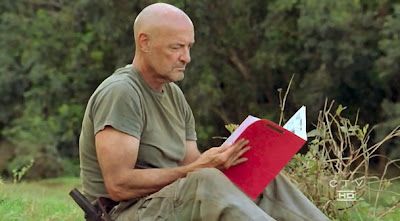
LOST: The Man Behind the Curtain


*** Spoilers ***

I heard rumors Ben was going to have a flashback this episode of LOST. I thought that the writers would portray him in a more sympathetic light and we’d see that he was just doing what he was doing because he was just trying to survive on the island.

I was partially right. The initial flashback of the young Benjamin Linus showed him as a kid whose father really didn’t care for him and blamed him for his mother’s death. So we really can’t blame him when he sets out to join the island’s original inhabitants.  But when he 1) kills his own father, 2) knowingly participates in the genocide of the Dharma Initiative, and 3) shoots Locke, all of my sympathy for him went right out the window. Ben is truly evil (but wonderful) character. I’m glad the writers took the path that they did and showed that plane crash survivors have a true enemy. Jack, Sayid, Sawyer, and company better be prepared for a true struggle when the original island’s inhabitants come for Sun (and Kate?).

Here’s my theory about the mysterious Jacob character that we saw briefly before Locke runs out of the house. My think he was the leader of the island’s original inhabitants before the Dharma Initiative genocide. Since Ben has proven himself time and time again to be a master manipulator and someone who loves power and control over others, my theory is that he learned more about the island’s secrets, managed to imprison Jacob in that house, and assumed the leadership of the island’s inhabitants. (The Others really don’t seem fond of him as their leader.) Jacob asked Locke for help because he wants to get out of the prison he finds himself in and get rid of Ben. That’s why Ben felt threatened when he realized Locke heard his voice and decided to shoot him. He doesn’t want Jacob to leave his prison.

Finally, a note to all those who complained (and you know who you are) about the episode earlier in the season where Hurley found the Dharma van as being a waste of time: Does it make you view the episode in a different light now that we know how the van came to be in that spot and who the Roger guy was who was driving it? There are no wasted episodes in LOST. Every episode really does ties into the larger story that’s just beginning to come to light.

Jacob

George Lucas Is Silly

"It's silly. It's a silly movie. There just isn't much there. Once you take it all apart, there's not much story, is there?" -- George Lucas on Spiderman 3. Having not seen Spiderman 3 yet (though I really, really want to see it. Have we found a babysitter, Marathon Girl?), I can't say whether or not the third move is silly.  But I can say that it's pretty brazen remark coming from the same man who created Jar Jar Binks

LOST Will End in 2010

So much of telling a story is knowing when to end the tale. It looks like the writers of LOST now know how long they have to conclude the tale of the survivors of Oceanic flight 815.

ABC announced Monday that it would air 16 uninterrupted episodes of "Lost" from February to May in 2008, 2009 and 2010.

The announcement came several months after executive producers Damon Lindelof and Carlton Cuse, whose contracts were up this season, discussed publicly their wishes to negotiate a finite ending for their island mystery instead of letting the show stay on the air indefinitely and die unnoticed.

Overall I think this another groundbreaking move for the television show and a good one for the overall plot, story, and characters. The writers will now be able to carefully plan out the remainder of the story and not have it go on and on until it becomes a shell of it's former self a la The X-Files and Alias.

This does make me wonder if they're ever going to bring Walt back on the show. Say they bring him back in 2010 -- four years since we've last seen him. He'll probably be a foot taller and have a five o'clock shadow by them so it remains to be seen how the writers will deal with him (if he comes back) and all the other children on the island who age as well.

Should this prove to be a success, I wonder if we'll see more shows that follow a more compact season (16 episodes run back to back with no reruns). "24" has played around with the no rerun format with success though they run 24 episodes. If it works (read: television can come up with some quality programming) it means television networks could have a lineup that starts in August/September and a completely new one starting in January. Fox does this to some extent but with limited success. Not that it matters to me that much considering LOST is the only show I watch anyway. At least I get three more seasons of it.

The only downside I see to this new format is that after the season finale in three weeks, there will be a nine month hiatus until Season 4 begins.

I'm sure I'll live.

I'm just not sure how. :-)

***

For those who are interested, a preview of tonight's episode "The Man Behind the Curtain" can be seen here.

St. George Marathon Lottery

Wahooo! We just found out Marathon Girl made it through the St. George Marathon lottery and will be running it in October. This is a very scenic and fun marathon to run. Marathon Girl is thrilled to have the chance to run it again. Time to make hotel reservations.

Next by Michael Crichton

Michael Crichton’s one fault as a writer is that readers have a hard time caring about his characters. Rarely do the people in his novels have much depth beyond what it takes for them to move the plot along. This is unfortunate because Crichton is an imaginative storyteller who has some neat ideas for his books. Though his characters may not be complex or enduring, Crichton excels at writing about science and technology in clear, crisp, and understandable way that most writers would struggle with. He also excels at bringing to the forefront moral and ethical issues that new technology confronts people with and wrapping an intriguing story around these concerns.

In his latest novel, Next, Crichton explores the brave new world of genetics. Scientists are racing to patent different genes within the human genome as well as cells from ordinary people. There’s big dollars at stake in this game to come up with a breakthrough genetic discovery and people are willing to do just about anything to profit from it.

As scientists monkey around with splicing and dicing genes, trouble is bound to happen. A transgenic human-chimp named Dave is accidentally created along with a talking and math-loving parrot named Gerald -- who is the funniest and the most in-depth character in the entire novel. Defense attorneys blame the sexual attraction to young girls of their client on a recently discovered thrill-seeking gene.

Probably the most frightening aspect of Crichton’s novel takes place in regards to one’s own body. Under current law – and Crichton isn’t making this up – one’s blood samples and other cells that are given for testing purposes can legally be claimed discarded waste and sized via eminent domain by research universities. The university can then profit from their resulting products from tissue samples without ever compensating the person they were taken from. So much for the 13th Amendment. Crichton illustrates this well in a courtroom drama of a former leukemia patient whose cells contain a unique cancer fighting ability but loses the right to do with his cells as he pleases.

Though not one of his better books (Jurassic Park, State of Fear, and Prey are much better), Next is a fast-paced read and very thought provoking. It’s too bad we don’t care about the people in the story as much as we do about the possible moral questions and dilemmas that Crichton raises. But if you’re looking for an entertaining summer read, consider adding Next to your list.

LOST: The Brig


*** Spoiler Alert ***

Many, many episodes ago Marathon Girl made the connection that Locke’s father was the same person who was responsible for swindling Sawyer’s parents. (She has a talent for connecting the stories on LOST. I am envious.) So the big surprise in last night’s episode of LOST didn’t come as a big shock to either of us. Despite the fact we knew what was coming from the moment the episode started, it was still one of the better episodes this season.

What made the episode so great is that Locke finally reached that transformation he (and viewers) have been yearning for since LOST began. Locke’s wanted to be a leader and do things to help people. Unfortunately, he always seems to be suckered into other people’s con games. He’s the one other people use to accomplish their selfish means. We’ve always wanted Locke to overcome because it’s been painful at times to watch him fail time and time again.

Finally, Locke was able to reverse the situation. He was able to get Sawyer (the island’s con man, of all people) to do something he couldn’t do himself. When Sawyer killed his father Locke not only got his father out of his life but proved to himself that he doesn’t have to be the sucker anymore. Locke’s transformation was similar to what Hurley went through earlier this season when he realized he wasn’t a big bad luck charm. (The big difference begin that Hurley’s transformation was funny and lighthearted. Locke’s was dark and disturbing.)

And now Locke’s headed back to the Others to take on Ben – the island’s other great manipulator. The mind games they’re going to play on each other are going to be fun to watch. Let’s hope Locke comes out the victor.

Locke and Cooper

TV Ratings

There is some fairly strong buzz about tonight’s episode of LOST. According to one reviewer this latest installment “leads to one of the show's darkest and most morally complex outings yet, one few other shows would dare to attempt.” Hopefully it lives up to the buzz. Interestingly there’s been some worry about declining audience for LOST and other popular television shows. Television executives are scrambling to find ways to attract more viewers.  But when you count the people who record the show and watch it later, the ratings for most shows are much higher. The ratings for LOST, for example, are up 24 percent when you count the number of people who record the show and watch it within seven days.

The real issue is that TV has become much more on demand the last two years. You can buy episodes off the internet, watch them on the web, or record them and watch them at your convenience. Yet TV studios haven’t changed the way they count the number of views. If you don’t watch the show when it’s broadcast, you don’t count.

I don’t have a solution to the problem but TV execs better way to report how many people are actually watching the shows and television networks need to find more creative ways to address the concerns of advertisers. It’s another example of old media struggling to adjust to a changing environment. (The same problem is faced with newspapers that have declining print circulations but usually a booming number of online viewers.)

I wouldn’t be surprised if the networks come up with a new way to count viewers in the next year or two and find a way to make those who are digitally recording shows have to watch a 30 second commercial or something (kind of what they do when you watch a show online) before you can watch the show.

And for those who want a 90 second peak of tonight’s episode of LOST, you can watch a clip here.

The Great College Lie

If you want to be successful you need to go to college. Without a college degree you’re destined to work at an unsatisfying, low paying job the rest of your life and will never be able to live the American Dream. Does that advice sound familiar? It should.

That’s the mantra of success preached from the time our children enter school. They’re told that a college education will be the best investment they can ever make. Educators tell them if they don’t have a college degree, they’ll end up digging ditches or performing other menial jobs and live in poverty and misery for the rest of their lives.

Parents reinforce this message by prodding their children to get good grades so a university will give them a scholarship. Popular entertainment depicts numerous stories of a brilliant kid growing up in a working class neighborhood with less-than-successful parents who tell their kid the only way out of the hell hole is to go to college.

The problem with this assumption is that it’s wrong.

A college degree does not ensure that anyone will be successful or have a comfortable lifestyle. Conversely the absence of a degree does not mean that one is destined to low-paying, menial work. Yet the importance of a college education has been drilled in our heads often enough that seven out of ten high school students will enroll in college not because it’s in their best interest to do so, but because they’ve been told (and in some cases pressured) by parents, educators, and councilors that college is the only way to obtain the American Dream.

This advice is often backed up with the statistics that show that college graduates earn more over their lifetime than their non-college counterparts. Pope Center Researcher George Leef notes in The Overselling of Higher Education, such statistics are not only misleading but assume that those without college degrees would secure better, higher-paying employment if they obtained a college degree. Leef writes:

Instead of looking at average earnings for each group – which inflates the earnings of the college-educated by including many fabulously wealthy professionals and business executives, while depressing the earnings of those without college degrees by including many individual who are scarcely literate – it is more sensible to focus on the workers at the margin. The right question to ask is this: For high school graduates who might have gone to college but did not, is it the case that their earnings would be significantly higher if they had instead enrolled in college?

Leef concludes that students who decide not to attend college are better off not going because they can hone their skills in a non-college environment as opposed to wasting their time doing things such as studying or writing papers when their interests do not lie in that direction.

Even among those with college degrees a well-paying, satisfying job never materializes. Again Leef writes that many college graduates find themselves with no marketable skills upon graduation and only marginally employed.

Services must be rendered. Some of those jobs demand a high degree of knowledge and skill, but most don’t. With burgeoning numbers of college graduates, we should not be surprised to find that many of them – especially those who obtained easy, low-effort degrees in soft subjects – can do no better in the job market than delivering pizza, selling coffee, or taking theater tickets.

No doubt many of these people are disillusioned after being told that their college degree was their ticket to success.

Not everyone is college material. This isn’t a bad thing. Just because someone opts not to attend college doesn’t mean they’re stupid or unable to become successful. Yet we tend to look down upon those who haven’t jumped through enough hoops to obtain a college degree. Someone may be able to understand the complexities of an automobile and quickly diagnose and fix the problem but because they have a technical certificate rather than a college diploma, we don’t view them as intelligent or successful as someone who works in a small cubicle staring at a computer screen all day.

This condescending view of some professions has led to the gradual decline in interest in technical training and a void in such professions as auto and aviation mechanics, electronics, and trades such as construction.

Fortunately, vocational schools and other training have received somewhat of a resurgence in popularity. And they’re focusing on more forward-looking careers than their traditional wood or metal shop days. Technical education can now provide careers in high demand and specialized fields like robotics, 3-D animation, and industrial maintenance technology. Many of these jobs pay very well. The Christian Science Monitor tells the story of a savvy student who pursued specialized computer classes in high school and landed a $52,000 a year after graduation. The student is doing something that he loves and being paid well to do it. No college degree required.

We do our children a profound a disservice when we reflexively assume that college is the only way to achieve success. Rather, parents and educators should help children and students focus on their interests, talents, and unique abilities in order to decide what kind of post-high school education would be most beneficial. College is a good path for many people, but others would be much better off attending a vocational school, learning a trade, or starting their own business.

Continually obtaining knowledge and skills are important and necessary to do what we love with our lives and to provide for ourselves and families – if we have them. But assuming the only way to obtain success is through college merely encourages many young adults to waste years of their life pursuing something that will ultimately be of no benefit to them.