Till Death Do Us Part, Part 1: What Happens When Death Ends a Marriage but Not the Vows?

Marriage promises exclusivity — emotional and otherwise. So what happens when death ends the marriage, but nobody tells the emotional expectations that the marriage is over?

In this first video of a six-part series, I'm reading an essay written by a woman in my Dating a Widower Facebook group — shared here with her permission — and adding my own thoughts as we go.

Part 1 sets up the core question this whole series is built around: why society applauds widowers for staying loyal to a marriage that's already ended, and who's actually cheering that on.

This is Part 1 of 6. New parts release each Sunday — subscribe so you don't miss the rest.

Transcript follows:

A woman in my Dating a Widower Facebook group wrote—and gave me permission to share—one of the most honest breakdowns I've read about what it actually feels like to build a relationship with a widower. It's called “Till Death Do Us Part, But for How Long?”

Now, over the next six videos, I'm going to read it to you section by section and tell you exactly why every word of it is important.

So let's start with the promise that marriage actually makes.

She writes:

“Marriage is unlike any other relationship we form in life.

We have parents, children, siblings, and friends, and each of those relationships carries its own irreplaceable place in our hearts. Marriage, however, asks something entirely different. It asks for exclusivity.

You know what I'm talking about. Not merely sexual, but emotional exclusivity, too.

When two people marry, they promise that no other romantic relationship will occupy the same place in their lives. We celebrate and declare that promise at our wedding ceremony, shared with family and friends gathered as witnesses. We even involve God. We call it fidelity. And we've built an entire institution around it.

Which is why I've often found myself asking a question that makes many people uncomfortable: What happens when death ends a marriage, but not the emotional expectations surrounding it?”

Now, that is a great question, and that's something I talk about a lot in my books, Dating a Widower and so on.

But really, it comes down to this: If you're widowed, how do you open your heart to someone new without forgetting your past or erasing it?

And here's what I've learned through coaching widowers throughout this: It's very possible. And, in theory, it's not even that complicated.

Now, in practice, it's a lot harder.

But that's because the widower doesn't know how to love again. It's hard because the expectations placed around him make it difficult.

For example, family expects him to stay loyal to a marriage that is over. Friends praise him for still missing her even though she's been gone for years and he's in a new relationship.

So the widower, in trying to open his heart, isn't just fighting his own grief. He's also—snorts—fighting a bunch of people who have decided that he can't open his heart.

If he's too happy, too moved on, too present with the new person, he's somehow betraying his late wife who died.

Now, this pressure is real, and if he doesn't push back against it, it becomes this third person, this ghost in the relationship that he's trying to build.

So the essay continues. She writes:

“There are few people in society more protected from criticism than widowers.”

She's spot-on there, by the way.

The loss of a spouse is a tragedy, and no compassionate person would argue otherwise. However, compassion should never prevent honest conversation, because the moment a widower chooses to enter another serious relationship, the conversation is no longer only about the woman who died. It also has to include the woman who is alive.

Yet society has created a chorus of contradiction.

We encourage widowers to find love again while simultaneously encouraging them to remain emotionally married to their late wives.

We applaud annual wedding anniversary tributes even though the marriage itself ended when death occurred.

We turn a blind eye when a home is preserved exactly how she left it.

We romanticize declarations like, “She will always be the love of my life.”

Then we act surprised when the second relationship struggles.

And here's who's usually doing the applauding: It's people who have never buried a spouse and people who have never dated someone who has.

Think about who shows up in the comments on a widower's anniversary post, gushing about how beautiful it is that he still loves her so much.

It's rarely another widow or widower.

It's rarely someone currently dating a widower and living with that reality.

It's usually friends, extended family, acquaintances—people watching from a safe distance, romanticizing something they never had to build a life inside of.

And that distance is important.

It's easy to call something beautiful when you're not the one competing with it.

It's easy to praise a shrine when you don't have to walk past it every day wondering where you fit.

So, when society hands out applause for keeping her memory alive in a new relationship, remember: It's usually coming from people with nothing at stake in that relationship.

And a widower who's serious about building something real can't afford to let people with no skin in the game set the terms of his new relationship.

So how do you actually know if someone's moved on?

It's not about how much time has passed.

In Part Two, I'll show you the real way to tell.

I'm Abel Keogh, a remarried widower and author of the book Dating a Widower: Starting a Relationship with a Man Who's Starting Over.

I help widowers build healthy new relationships and help the women who love them understand what's really going on.

Subscribe to this channel so you don't miss the rest of the series.
Where's Abel?

Hi everyone. It's been about a month since my last post, so I figured I'd give you a quick update.

This wasn't a planned break — life just happened, all at once. The family took a trip to Idaho. I got home and promptly got sick for two weeks. And then, right as I was getting my legs back under me, my son got married yesterday.

Vacation, sickness, a wedding — that's a lot to stack in one month, and something had to give. Turns out it was the blog and the videos.

If you want the fuller story, I made a short video about it here.

The good news: I'm back. I'm feeling better, the vacation and wedding are both in the rearview mirror, and I've got time to create again.

I've got the first of a six-part video series dropping next week that I think you're going to love, plus some great book updates on the way.

Thanks for your patience and stay tuned for more!

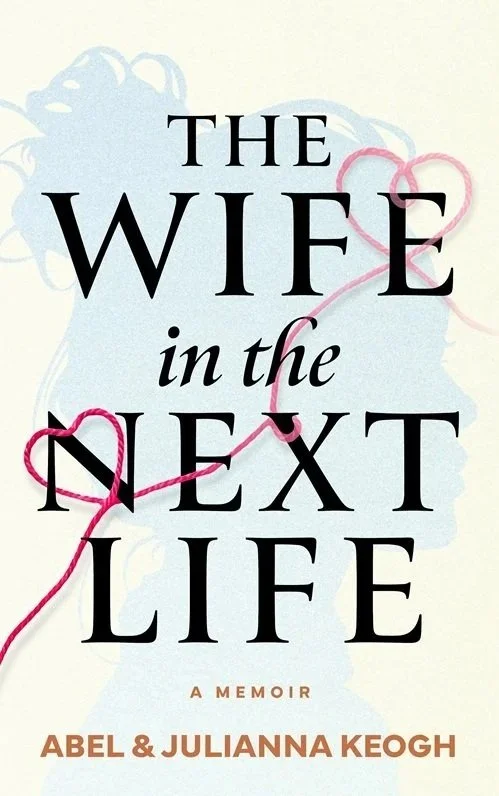
New Edition of "The Wife in the Next Life" Now Available

A Widower's Second Chance at Love. A Woman's Unanswered Questions About Eternity.

Great news! The new edition of The Wife in the Next Life is now available. We've given the manuscript a light polish for clarity, finalized a brand-new cover design, and put the finishing touches on the print layout. It's ready for you to read.

The Wife in the Next Life is mine and Julie's raw, alternating true account of falling in love and building a relationship without the answers most couples take for granted. Told with the same unflinching honesty that made Room for Two a lifeline for thousands of readers, it's the story of two people choosing to move forward — into love, into marriage, into an unknowable next life — before they have any of the answers.

At some point, we all face questions with no easy answers. How we choose to move forward in spite of them can define the rest of our lives.

Here's what readers have said about The Wife in the Next Life on Amazon:

  • "Perfectly paced, beautifully written, hard subject."

  • "Rarely do we get a chance to look into someone's life and see the joy, pain and sorrow they have lived."

  • "It was a rare, wonderful read and a privilege to share in the raw emotional rollercoaster that has brought them both to their settled lives together today."

Available now in paperback, ebook, and audiobook.

The Real Reason Someone Needs a Shrine to Their Late Spouse

Note: Watch a video version of this post here.

Something I frequently see in coaching sessions: a person dating a widow or widower asks for the late spouse's photos to come down from the living room, bedroom, or nightstand. The next thing that happens is they're called selfish, insecure, and unable to handle someone's past.

Nobody stops to ask the obvious question: If you can't build a new marriage without a tribute to the old one, who's actually insecure here?

Now, if you've read my books, you know I believe it's up to the couple to decide what goes in the home they're building together. Some are fine with a photo or two of the late spouse. Others prefer none at all. It's up to them to decide what works. And when minor children live in the home, I've been absolutely clear that a photo of the deceased parent in their room is fine.

What I'm not a fan of is labeling the non-widowed spouse as insecure or selfish for wanting to feel like a priority in the relationship — because that argument flips easily. A widow or widower who's secure in their relationship doesn't need photos of their deceased spouse on the wall. They don't need the house arranged like a museum to feel connected to their past. A secure person isn't leaning on pictures or anything else, because they're standing on their own.

If you're widowed, being asked to remove photos or trinkets so your new love can feel comfortable isn't about erasing anyone. Nobody's asking you to forget your late spouse existed, or saying grief has a deadline. But if your new relationship needs a shrine to survive, that's not love for the person who died — that's a crutch, and your new love is the one who has to walk around it every day.

And if you're the one dating a widow or widower — you're not wrong for wanting a home that feels like yours too. Wanting to come first in your own house isn't insecurity. It's a baseline.

The healthiest marriages don't run on the constant presence or total absence of photos. They run on both people feeling loved, respected, and like they actually come first. That's the standard. Everything else is decoration.

So next time you're labeled insecure for asking a photo to come down, ask who's really afraid to let go.

Who Are You Now that Your Marriage is Over?

Note: You can see a video version of this post here.

Who are you now that your marriage is over? If you can't answer that, you're not ready to date-you're ready to repeat the same patterns and blind spots-only with a new person standing where your ex or late spouse used to be.

 The hard part about dating after divorce or being widowed isn't learning to love again but figuring out who you are without your ex or late spouse, your grief, and the old script running the show.

Maybe you're grieving a marriage that ended in a hospital room. Maybe you're grieving one that ended in a courtroom. Either way, the marriage is over-but if you're still making decisions like you're still in it, you haven't actually left it.

 You don't build a healthy future with someone else until you know who you are on your own. Your past shapes you, but don't let it write your next chapter.

He Says He's Moved On. His Home Tells a Different Story.

Note: You can see a video version of this post here.

A viewer writes, “I’m dating a widower, and he doesn’t think the very large memorial of his late wife—who passed away six years ago—is a distraction to moving forward. I don’t want to pressure him, but I feel like the constant reminders are affecting his ability to fully move forward.”

First, I hear what you’re saying—you’re trying to be respectful, not controlling. That matters.

But here’s the hard truth: it doesn’t matter what he says about it. It matters what he does. If, after six years, the memorial setup is still taking up significant emotional space in the home and in the relationship, then that tells you something about where he actually is in his grief—not where he claims to be.

You can’t argue someone into being ready. And you can’t love them into letting go of something they’re not ready to let go of.

Now, this isn’t about forcing him to erase his past. It’s about whether there’s room for you in his present. If he’s unwilling to make any adjustments that acknowledge how this impacts the relationship, then you have to take that seriously.

At that point, the question shifts from “How do I get him to change?” to “Is this the kind of relationship where I can truly be a priority?” If the answer is no, then it may be time to step back and find someone who’s actually available for the kind of relationship you want.

I Took Down His Late Wife's Photo Without Asking!

Note: You can see a video of this post here.

A viewer asks, “Abel, what if I took down the picture of him and his deceased wife on my own without his permission? I did it, and he didn’t say a word. Do you think he secretly resents me for it, or do you think he realized it was time to take it down?”

The only person who should be taking down photos or personal items connected to the late wife is the widower—not you. Now, you absolutely should speak up about how those things make you feel. But crossing the line and removing them yourself? That creates resentment, whether he says it out loud or not. You’ve planted a ticking time bomb in the relationship, and eventually it’s going to blow up.

What you should do is put the photo back up, apologize for taking it down, and let the widower decide when he’s ready to show he’s opening his heart to you. If he’s truly ready for a new relationship, those changes need to come from him—not from pressure or control.

Is It a Red Flag If He Doesn't Tell You He's a Widower?

Note: You can watch a video version of this post here.

A viewer writes, “Abel, what if he doesn’t tell you he’s a widower on the first date?”

Personally, I’d hope he brings it up right away on the second date and has a good reason for not mentioning it sooner. Is it a red flag or a dealbreaker? Not necessarily. I’ve worked with clients in this situation, and as long as there’s complete honesty and transparency going forward, I’d usually let it slide.

To be fair, my first date with Julie probably would’ve gone better if I hadn’t dropped the “widower bomb” right in the middle of dinner. Waiting until the second date might have made things smoother. The bigger issue isn’t whether he tells you on date one or date two—it’s whether he’s emotionally ready for a real relationship.

So, whether he tells you on the first date or the second, keep your eyes wide open for red flags and make sure he’s truly ready to open his heart to you.

Losing His Wife, His Newborn Daughter, and Every Answer He Had

Enjoyed being on the This is My Chapter podcast. In it I discuss how I became one of the internet's first voices for young widowers — starting with an anonymous online diary that organically grew into a lifeline for thousands of men who had nowhere else to go. I also discuss my journey through grief, my disastrous first date with Julianna, and how I reacted when she told me "I won't play second fiddle to a dead woman.” It’s what rebuilding looks like when the old life is gone.