Kill Your Widower's Kids with Kindness

Are the widower’s adult or minor children not accepting you? If so, this video is for you.

This is for all the women who have tried to connect with the widowers' kids, friends, and family, and they won’t accept you. You've been kind and patient. You've bought the birthday gifts, shown up with a smile, tried to connect, and you're getting nothing back. They ignore you, they're curt with you, or they look right through you like you don't exist. And you're starting to wonder if any of this is even worth it.

Yes, it is, and my suggestion is to keep being kind.

Here's why.

When kindness isn't returned, the natural reaction is to pull back. You want to match their energy and have them feel the rejection and hurt you’re feeling. That instinct makes complete sense, but the moment you respond to their coldness with coldness, you've handed them a reason to justify how they're treating you. You've given them ammunition to continue their behavior. Don't do it because it will only make a bad situation last longer.

That said — I'm not telling you to be a doormat. If his kids are being genuinely disrespectful or abusive, that's a direct conversation you need to have with your widower. You don't absorb that in silence. And you don't have to keep putting yourself in situations where you're clearly not wanted. If you're being excluded or made to feel unwelcome, stop volunteering for it. What you can control is how you show up when you are present — the warmth you bring, the consistency of your character. That's where your kindness lives.

Now, the cold, standoffish behavior of his children isn't acceptable, and I'm not going to condone it What I’d like to do is give you some insight as to why they’re most likely behaving that way. What you're often up against is someone who’s lost their mother and is trying to figure out where you fit in their world — or whether you're even allowed to. That doesn't excuse how they're treating you, but it should change how you respond. You don't fight against grief and change. You outlast it.

And you don't outlast it alone — because here's where I'm going to speak directly to the widower's role, and it's non-negotiable. He needs to have your back. That doesn’t mean he referee every interaction. but when his kids are treating you poorly, he needs to address it. When you show up and make an effort, he needs to see it and acknowledge it. You should never be out there carrying this by yourself while he stays neutral, trying to keep the peace, because what he’s really doing is leaving you exposed. Being your boyfriend, husband, or partner means being in this with you — and if he's not doing that, there’s a different conversation that needs to happen with him.

Now, in all my years of coaching, the reason I suggest you return their coldness with kindness is that it works. The women who navigate this successfully keep showing up. They stay kind. They make sure their partner has the full picture and then they put in the effort regardless of how slow the progress feels. The truth is, people can only resist genuine kindness for so long. It doesn't happen fast or overnight, but it does happen slowly and gradually. When it’s applied consistently, it softens hearts every single time.

And even when it doesn't shift as fast as you want, choosing kindness frees you from lying awake replaying the cold look they gave you at dinner. You've made your decision. You know who you are in this situation. That clarity is worth more than people realize.

Keep showing up, keep going, and kill them with kindness. You don’t do this because they deserve it, but because you're planting seeds — and some of those seeds are going to grow into something you never thought was possible at the start.

I'm Abel Keogh, author of Dating a Widower: Starting a Relationship with a Man Who’s Starting Over, and I'll see you next week.

Her Stepchildren Call Her Mom Because Her Husband Always Backed Her

Note: Watch a video of this post here.

Her stepkids call her mom. This was the best social media post I saw this Mother's Day. In it, the woman tells a story about marrying a widower and becoming a stepmom to a 15 & 21 year old. She writes: "There were some difficult times but my husband always backed me and we made it through. He died of heart disease several years ago. Today 'my' kids introduce me as their mother and we have a loving, caring relationship. They remember me every Mother's Day. I am so blessed."

Did you see the reason their marriage succeeded and her kids call her mom today? It's not because she worked harder than every other stepparent — but because her husband did something many widowers have trouble doing: he backed her.

Now, she doesn't get into specifics, but I imagine it went something like this: When the kids pushed back on her rules, he stood beside her and enforced them. When they tried to go around her to get what they wanted, he redirected them back to her. When extended family questioned her role, he made clear she was his wife and she was the authority in their home.

That's the variable most widowers don't understand. You can't drop a new partner into a family that was functioning without her and expect everyone to just figure it out. Someone has to establish her place — and that job belongs to you.

The stepchildren didn't bond with her despite the hard moments. They bonded with her because their dad showed them, over and over, that she mattered.

You can't control whether your kids accept her. You can't force them to open their hearts. But you can control whether you back her — whether you make her place in your home and your life impossible to miss. And when you do that consistently, you give your kids a reason to come around. You give them an incentive to accept the relationship and her place in it.

That's what this widower did. And years later, when he was gone, his kids held onto her — because he had shown them she was worth holding onto.

How to Make Your Marriage Last

If you're a remarried widow or widower, this is how you make Chapter 2 last: Honor your late spouse privately and build your new marriage publicly.

The Mini-Wife Trap: How Widowers Create It and What It Takes to Break It

Is your daughter filling a role she was never meant to play? After losing a spouse, many widowers unknowingly pull their daughters into an emotional partnership—leaning on them for comfort, decision-making, and companionship. It feels natural and loving, but it's not. It's the mini-wife trap, and it's doing real damage to your daughter, your relationship, and your future with a new partner.

In this video, I break down how this dynamic starts, why widowers miss the signs, and — most importantly — what it actually takes to lead your family back to healthy ground.

If you're in a relationship with a widower and something feels off with his daughter, this video will help you understand what you're dealing with.

If you're a widower and you suspect this might be your household — this one's for you.

There's a dynamic that quietly destroys more widowed relationships than almost anything else and most people don't even know it has a name. It's called the mini-wife. And if you're living with that right now, this video is going to be one of the most important ones you watch.

So what exactly is a mini-wife? It's when a widower's daughter—typically an adult daughter with a life of her own—gradually steps into the role that belonged to her mother. She runs the household, manages her father's emotional life, and positions herself as the most important person in his world. And the widower, out of grief, guilt, laziness, or simply not knowing any better, does nothing to correct it.

It looks a little different in every family, so let me give you some real-world examples I've seen in my coaching practice:

  • Sometimes she runs the household. She cooks, plans holidays, vacations, and family activities. She also holds veto power over anything that might change how the house looks, even if she doesn't live there. Anything that might "erase" mom gets shut down fast.

  • In other cases, she becomes his emotional partner. He vents to her, processes his grief through her, leans on her for comfort in ways that belong between spouses—not a father and daughter. Because she's grieving too, neither of them recognizes how unhealthy the dynamic has become.

  • In another example, she parents him instead of the other way around. She tells him what to do, where to go, who to see, and when. The parent roles have quietly reversed, and nobody's correcting it.

  • Finally, when he starts dating, she becomes the gatekeeper — making her disapproval known, seeking constant attention to hold her position, and engineering one-on-one time that deliberately excludes the new woman. And too often, dad lets her win.

Underneath all of these examples is a deep sense of entitlement: she should always come first. No exceptions or negotiation is ever allowed.

Sound familiar?

How the Mini-Wife Happens

Many of you are probably wondering how it starts. Well, here's the thing — this rarely starts as something obvious or intentional. Most of the time, the mini-wife dynamic develops out of love, grief, and survival. When someone loses a spouse, they lean on the people closest to them. That's human and normal. A daughter who steps up to help her grieving father is doing something that comes from a good intentions.

However, somewhere along the way, the dynamic shifts from healthy to unhealthy, from temporary to permanent — and by the time it becomes a problem, everyone has gotten used to it. The widower defers to her not because he's checked out, but because it feels natural at this point. And that comfort is exactly what makes it so hard to resolve.

Left unaddressed, the mini-wife dynamic costs everyone in the picture — the widower, his daughter, and the woman he's dating.

If you’re the widower with a mini-wife: This dynamic lets you avoid the real work of grief. Instead of processing your loss and eventually opening your heart to a new partner, you've unconsciously outsourced your emotional needs to your daughter. It feels comfortable — it probably even feels like family — but it's keeping you stuck. This dynamic will sabotage every relationship you try to build until you address it. Yes, your daughter is important, but she should not be the emotional center of your life, and she should never have control over your personal decisions.

For the daughters who are mini-wives: Being your father's emotional support was never your burden to carry. Women who take on the mini-wife role often develop distorted ideas about relationships, struggle with boundaries, and carry anxiety and responsibility that was never theirs to bear. You’re probably doing this because you and your father are trying to hold what's left of the family together. As admirable as your intentions are, you’re an adult who needs to build your own life, your own relationships, and your own future. The mini-wife role doesn't just hold your father back — it holds you back too. You have a life to live too.

For the new woman whose widower has a mini wife: If this is your reality, you already know how isolating it feels. You're not just competing with the memory of his late wife — you're competing with a living, breathing person who has been elevated to a position you're supposed to hold. You get cast as the outsider. Sometimes as the villain. You try to connect with the family and hit a wall every time. And when you bring it up, you risk looking like you're jealous of a child. It's an impossible position — and you deserve to know it's not in your head. However, this isn’t your problem to fix.

How to Fix the Mini-Wife Problem

So, how does one fix the mini-wife dilemma? Getting back to a healthy father-daughter relationship starts and ends with the widower because he's the one who has to lead. Here's how it’s done:

First, reassert your role as the parent. Do it with love and patience, but do it clearly and firmly so your daughter understands where things stand. She needs a father, not a partner. That means you make the adult decisions and set healthy boundaries with her. You also stop processing your emotional life through her.

Give her permission to just be your daughter again. She may resist at first — she's gotten used to this role, and stepping out of it can feel like another kind of loss. But give her the relief of not having to carry it anymore. Give her the freedom to focus on her own life. Bring in support if you need it. A family therapist who understands grief and blended family dynamics can make an enormous difference — for both of you.

If your daughter pushes back hard — and she probably will—let her. If she threatens to cut off contact, let her take that path. It will give her the time and space she needs to process her own grief and emotions. When she's worked through it, she'll be in a far better place to have a healthy relationship with both you and your new partner.

Here's the bottom line: If you're watching this and recognizing your own household — that's your sign. Not tomorrow. Now. You're not protecting your daughter by keeping things the way they are — you're failing her. She didn't ask for this role. She inherited it because you weren't ready to lead. The most loving thing you can do right now is take it back. Stop leaning on her and start leading her. Free her from a role she was never supposed to carry.

I’m Abel Keogh, author of the book, Dating a Widower, and I’ll see you all next week.

My Jealous Boyfriend Dumped Me Because I Love My Late Husband

Note: You can see a video version of this post here.

A viewer writes: "Abel, I'm a widow, and my boyfriend just dumped me because he was jealous that I will always love my late husband. What advice do you have for people dating a widow or widower so they won’t be so jealous?"

As a remarried widower and relationship coach, I've worked with a lot of people navigating this exact situation — and that jealousy rarely comes out of nowhere. The primary reason someone feels jealous of dating a widowed person is that the widow or widower keeps their late spouse front and center in a new relationship and expects their new partner to just accept it. Because of their actions, the new partner starts to feel like they're competing with a ghost or that there are three people in the relationship.

Now, are there some people who simply aren't cut out to date a widow or widower? Sure. But they're the exception, not the rule. In most cases, the jealousy is a direct response to the widow or widower's behavior.

So yes, it takes a special person to love someone who's lost a spouse, but it also takes a widowed person who's truly ready to open their heart and build a new life, not just fill a void. Before you ask your new partner to be more understanding, ask yourself: Am I actually showing up for this relationship — or am I still living in the last one?

That's the real question, and only you know the honest answer.

If He Still Has a Fallback, He Was Never All In 

Note: You can watch a video version of this here.

 A viewer writes: Abel, what do you think about a widower that keeps an ex as a "friend" to pull back in when he is in between relationships or when his current relationship is difficult? If the friend were "the one" wouldn't the widower keep them in that place in their life instead of using the friend as a place holder when they are broken and lonely? 

What you're really asking is if she's being used--and she is. I'll get to that in a minute. But you're missing the more important question: why does he still need someone to fall back to?

 A man who keeps an ex on reserve isn't ready for a relationship. He's outsourcing his emotional life to someone he has no business leaning on, processing things with her that he should be working through alone, a therapist, or with his actual partner. A man who's done the work doesn't need a fallback because he's built something inside himself that holds. The fact that there's a "friend" on standby tells you exactly where he is emotionally and how important really are.

 A man who's ready doesn't keep a bench. If there's still someone waiting in the wings, he's not ready for commitment and there's no incentive for him to give his entire heart to someone when there's someone ready to support him when relationship challenges arise.

New Book Coming Soon

Just finished my latest book. I’ll release more details about it soon. What I can tell you is that it will be available before the end of the year. Stay tuned for more!

Stop Waiting for a Man Who Isn't Ready

Note: You can see a video version of this post here.

A viewer writes: "Abel, my widower has asked that we take a break so he can get help with his grief and put his life back together. How long should I wait?"

How long should you wait? Well, you shouldn't wait. Don't put your life on hold for a man who isn't ready to be in it. Taking a break to "work on himself" may be genuine but that's his journey, not yours.

While he’s getting his act together, live your life. Date. Have fun. Do things that help you grow personally and professionally. If he eventually does the work, gets his act together, and comes back — you can decide then whether you still want what he's offering. But that decision gets made on your terms, not from a place of having waited around hoping he'd show up.

Most importantly, when you wait, you don't get those months or years back. Don't give them to someone who isn't even in the relationship right now. The right man won't ask you to wait for him to decide if he wants a life with you. He'll already know.

Grief: The Origin Story, Not the Ending | How to Stop Being Stuck After Loss

There's a version of your life where loss defines you forever, and there's a version where it's the origin story and made you into someone your former self couldn't have imagined. This video is about the difference between those two movies, and the single decision that determines which one you end up in. If you've been stuck in grief, and some part of you already knows it's time, this is the permission you've been waiting for.

A widower, who lost his wife four years ago, posted on social media that he's still completely stuck in a life rut. Some examples he gave include:

  • Her closet is untouched, three rooms sit frozen in place, and he hasn't dealt with a single thing from the day she died.

  • He hasn't dated, doesn't feel worthy of anyone's time, and is losing the drive to even try to change.

  • He's raising four kids alone and feels completely disconnected — from his wife's presence, from himself, from any sense of what comes next.

Now this widower’s situation isn’t that uncommon, and a lot of people in the comments, many fellow widows and widowers themselves, were being kind and sympathetic to his plight. And, to an extent, I get that. But I want to talk about something that might actually help him, because kindness isn't always the same thing as truth.

Grief and loss are among the heaviest burdens a person can carry. Losing a spouse rewrites your entire life, including your routine, identity, and what the future looks like. In the months after loss, you deserve every bit of grace while you try to figure things out. But here's what nobody tells you: at some point, kindness, grace, and sympathy stop serving you and start protecting you from the very thing you need to do.

The people who recover from devastating loss and go on to build something meaningful all have one thing in common: at some point, they stopped identifying as someone who was grieving and started identifying as someone who was rebuilding. That shift doesn't mean forgetting their late spouse or whoever they lost, nor does it mean their grief isn't real or the loss profound. It just means they decided which movie they were the main character in: the one where grief is the permanent backdrop of their life, or the one where grief is the origin story.

Think about that for a minute. There are only two movies. In one of them, the house stays exactly as she left it, the closet stays untouched, the rooms stay frozen, and every day looks like the last. The main character—YOU—is defined by what he lost. In the other movie, the same loss happens — same grief, same pain, same love — but you use it to change for the better. Instead of being stuck, you start building something new out of the ashes. Same inciting event. Two completely different stories. The only difference is the decision about which one to be in.

Here's the truth: you already know which movie you're in. You don't need someone to tell you. When grief has gone on long enough, it stops being something happening to you and starts being something you're choosing—perhaps quietly and unconsciously—but it’s something you’re choosing nonetheless. The routines that keep you frozen, the spaces you haven't touched, the decisions you've stopped making, that’s infrastructure, but to keep your life from moving forward after loss.

Now, the good news is that what is keeping you stuck can be dismantled, and here are 3 steps to get you unstuck and become the hero in your own movie.

First, clear out what's keeping you stuck. Here's what happens after loss that nobody talks about: the physical world freezes. You stop moving things because moving things feels like erasure. You leave the closet untouched because opening it means accepting something you're not ready to accept. The photos stay exactly where they are, the clothes stay folded, the car stays parked — and every single one of those things sends your brain the same quiet signal: nothing has changed. But everything has changed. And surrounding yourself with evidence to the contrary doesn't bring them back — it just keeps you from moving forward. So look around and ask yourself honestly: is each thing a tribute, or a trap? Is it honoring the love, or is it holding the grief in place? Deep down, you already know the difference.

Next, break the routines that have become a substitute for living. Nobody tells you that grief has a rhythm. But it does. After a loss, you settle into patterns that help you survive — and for a while, that's exactly what they're for. They're scaffolding. They hold you up while you figure out how to stand on your own. But scaffolding is supposed to come down. Same chair, same show, same order to the day — at some point, the scaffolding becomes the structure, and you stop noticing it's there. The routines stop being something that helps you get through the grief and start being something that keeps you in it. So change something. Even something small. Not because the routine is wrong, but because you are capable of more than repeating yesterday. Every break in the pattern is proof that time is still moving — and so are you.

Finally, start making decisions again — because decisions are how you take back control. Here's the paradox of grief: at the very moment life feels most out of control, the instinct is to stop trying to control anything at all. Stop planning. Stop reaching out. Stop deciding. Because if you don't try, you can't fail. If you don't move, nothing can go wrong. But that instinct, left unchecked, hands control of your life over to inertia — and inertia is a terrible thing to be in charge of your future. So take it back. Pick up the phone and invite a friend to dinner. Sign up for a class. Find somewhere to volunteer. Take a trip. Give dating a try — not because you have it all figured out, but because doing something is how you remember that you're someone who can. You're not looking for instant transformation. You're looking to put your hands back on the wheel. Every decision, however small, is an act of reclaiming your life. And the people who come out the other side of real loss don't just survive it — they use it. They become someone their former self couldn't have been without it.

The movie worth being in isn't the one where loss defines you — it's the one where it forges you. Nobody's asking you to forget your late spouse or pretend the grief wasn't real. But you're still here. And while you're still here, the story isn't over. In one version of it, you stay in the same chair, in the same house, surrounded by the past — waiting for a life that isn't coming back. In the other, you become someone your former self couldn't have imagined: someone who was cracked open by the worst thing that ever happened and came out the other side bigger, stronger, and more fully alive because of it. That person exists. He or she is in you right now. The only thing standing between you and him is a single decision: to act or be acted upon.

I’m Abel Keogh, author of the book, Dating a Widower, and I’ll see you all next week!

Join My Early Reader Team

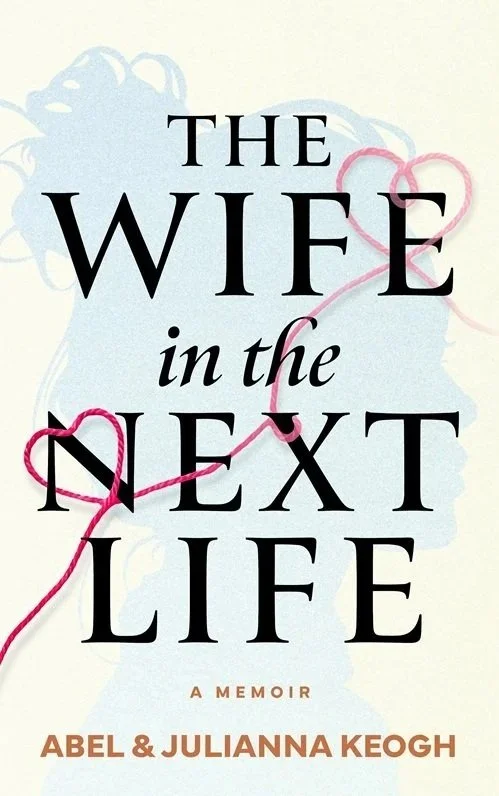
I’ve got several new books coming out later this year—fiction, a Christmas novella, and a new memoir—and I’m looking for a small group of early readers.

You’ll get a free advance copy before release in exchange for an honest review.

Spots are limited. If you’re interested, fill out the form below.